rec.music.country.western
Country and western music, all eras.
From Jimmie Rodgers to the current Nashville chart, with the classic-vs-contemporary argument as its perpetual engine — discographies, concert reports and songwriting-credit corrections supplied by obsessives.
University library guides cited this group as a reference point for the genre’s online discussion — the link that brings many readers here.
On this page
A genre gets an address
Usenet sorted its enthusiasms the way a library sorts books: hierarchy first, shelf second. Recreational topics lived under rec.*, one of the big hierarchies whose story is told on this site's rec.* page; music lived under rec.music.*; and rec.music.* split along two axes at once. One axis was function — rec.music.makers for people who played instruments, rec.music.reviews for people who judged records, rec.music.info for announcements and reference postings, rec.music.cd for the compact-disc era's format anxieties. The other axis was genre, and the genre axis is what produced the shelf this page documents. The roster grew across the late 1980s and the first half of the 1990s, from rec.music.classical and rec.music.folk through rec.music.celtic, rec.music.reggae and rec.music.bluenote (jazz and blues) to rec.music.hip-hop, created in 1995, with rec.music.misc as the room for everything unclaimed. Country's address on that shelf was rec.music.country.western.
The name was a period piece before the first post arrived. “Country and western” was the trade label of the 1940s and 1950s — the compound under which the American record industry filed both the southeastern string-band and honky-tonk traditions and the cowboy and dance-band music of the Southwest. The industry had largely dropped the “western” by the early 1960s, when Nashville settled on plain “country”. Usenet, indifferent to marketing, fixed the older compound into a group name and kept it there for decades, along with the laconic description that followed the group through the periodic lists of active newsgroups: “C&W music, performers, performances, etc.”
The hierarchy contained a small structural joke: there was never a plain rec.music.country. The group arrived with both halves of the compound attached, so anyone browsing the group list for the genre found the ampersand-era name or nothing, and when a second country group was eventually created it slotted in under the same rec.music.country.* prefix rather than tidying it. The group appears in the standard newsgroup lists by the early 1990s; the oldest control message preserved for it in the standard control-message archive is a routine newgroup re-issue from May 1991, its body consisting of nothing but the one-line description — proof the address was established by then, though not a birth certificate. The timing matters chiefly for what it implies: the group's active life sat squarely across the genre's biggest commercial decade. A group wearing an antique name spent the 1990s arguing about the most commercially successful version of the music there had ever been.
The name stayed frozen for a mundane procedural reason. In the managed hierarchies, groups came into being through a formal proposal-and-vote process, and there was no mechanism for renaming one — fixing the label would have meant proposing a new group, passing a vote, and persuading an entire settled population to move house, all to delete a word. Nobody ever judged the ampersand-era compound worth that much effort, and so a label the record industry retired around the time of the Kennedy administration outlived the twentieth century as a live address on the network.
The western half of the name
The “western” in the group's name pointed at something real, even if the industry had stopped saying it out loud. It meant western swing — Bob Wills and the Texas Playboys and the whole jazz-inflected dance-band strain of the music, built for Texas and Oklahoma ballrooms — and it meant the cowboy-song tradition of the Sons of the Pioneers and the singing-cowboy films, a repertoire of trail songs and close harmony that had little to do with Appalachia. The old trade label had yoked these to the southeastern traditions for filing convenience, and the newsgroup's charter, as written, inherited the whole estate.
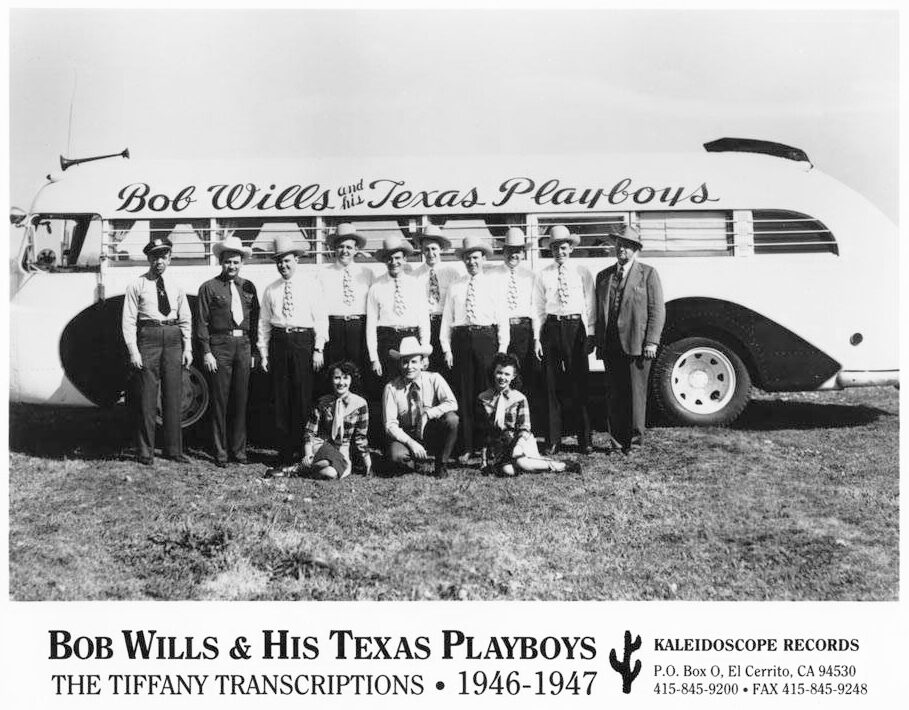

In practice the western half was mostly vestigial, but never quite dead. Threads on Wills reissues, on the dance-hall circuit, and on the cowboy-song repertoire persisted as a minority interest inside traffic that mostly tracked contemporary Nashville output, and the name itself was a standing invitation to pedantry — the observation that almost nobody in the group was discussing anything western was itself a recurring thread genre. The revivalists had material to work with in the period, too: western swing never entirely stopped being performed, and its partisans in the group treated the “western” in the group name as a charter right rather than a typo.
The decade that filled it
the years in which such groups were busiest coincided with a commercial event that country music had not seen before and has not repeated on the same scale since. Garth Brooks's third album, Ropin' the Wind, entered the Billboard 200 — the main American pop-album chart, not the country chart — at number one in September 1991, the first country album to do so. It stayed in the chart's upper reaches for months, and Brooks kept repeating the trick for the rest of the decade; the Recording Industry Association of America would eventually rank him the best-selling solo albums artist in United States history. Whatever one thought of the music, and the group's regulars thought many things, the scale was unarguable.
Part of what made the boom feel sudden was that the measuring equipment changed in the middle of it. In 1991 Billboard switched its main album charts — the Billboard 200 and the country albums chart among them — from ranked sales reports submitted by a sample of record shops to SoundScan's electronic point-of-sale piece counts, and country records promptly climbed: the genre had been selling considerably better than the industry's own error-prone reporting had shown. Brooks's number-one pop debut came months after the switch. For the group this was a gift of the driest kind — chart threads could now argue from actual sales figures, and did.
The boom had a dance craze attached. “Achy Breaky Heart”, Billy Ray Cyrus's 1992 debut single, crossed onto pop radio and arrived with its own choreography; line dancing briefly became a national pastime, taught in gyms and danced in purpose-built clubs far from any traditional country audience. Television did its part: Country Music Television, launched in 1983 as the first nationally available channel devoted to country music videos, gave the genre the video-driven star-making machinery that MTV had given pop, and by mid-decade country stood as the most common format on American radio. This was the environment the group's arguments happened in — a genre visibly gaining listeners and just as visibly changing to keep them.
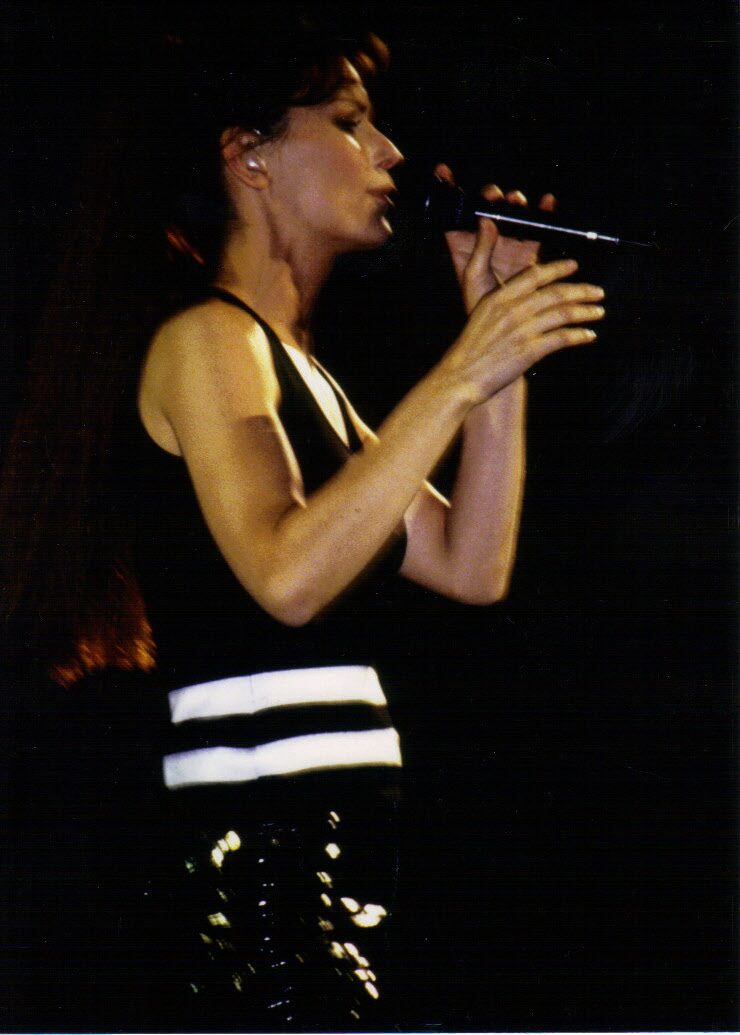
The decade closed with the crossover question made flesh. Shania Twain's Come On Over (1997), produced by her then-husband Robert John “Mutt” Lange — a man previously known for AC/DC and Def Leppard records — went on to sell over forty million copies, becoming the best-selling country album of all time and, per Guinness World Records, the biggest-selling studio album by any female solo artist in any genre. Whether an album that outsold nearly everything in pop while being produced like a rock record was still country was not a question the group needed to invent. The decade kept mailing it in.

For the newsgroup, the boom worked as an intake valve. The same mid-1990s years that put country at the top of the radio ratings also put millions of Americans online for the first time, and each new cohort that went looking for somewhere to talk about the music found this group already sitting at the genre's obvious address. The boom supplied the members and the argument in a single package: a new listener arriving via Brooks or Twain and a twenty-year record collector arriving via the archive of grievances could meet in the same thread, and regularly did.
The daily traffic
Day to day, the group carried the staple genres of any Usenet music group of the period, adapted to country's particulars:
- Requests for recommendations and starting points — where does a newcomer begin with Merle Haggard, what to buy after the greatest-hits disc;
- Song identification and provenance threads: naming a half-remembered song from a verse fragment, and the related and more contentious question of who cut the original — country being a genre where the famous version is frequently the third recording;
- Discography and chart threads: correcting release dates, tracking what had and had not made it onto compact disc, comparing pressings and reissues;
- Concert reports and tour itineraries, filed by attendees within days — setlists, sound complaints, opening acts;
- Reactions to new releases, which in a boom decade meant a steady drum of them;
- And complaint about country radio — what it would play, what it would not, and what that was doing to the genre — a genre of post that needed no particular news event to sustain it.
Songwriting credits were a house specialty. Country is built on a professional songwriting economy — the performer and the writer are usually different people, hits circulate between artists, and publishing credits accumulate errors as they pass through liner notes, songbooks and memory. Threads correcting who actually wrote a given standard, or tracing a hit back through three earlier recordings to its composer, drew out the group's most patient contributors, and they are among the threads that give the archive its reference value: the corrections were made in public, argued over, and sourced against record labels and copyright registrations that posters actually owned.
The deaths of major figures reliably produced the group's longest and least combative threads. The 1990s and early 2000s were heavy with them — Conway Twitty in 1993, Tammy Wynette in 1998, Chet Atkins in 2001, Waylon Jennings in 2002, June Carter Cash and Johnny Cash within four months of each other in 2003 — and each obituary thread performed the same double duty: memorial first, then the collective correction of the record, as posters supplied discographies, radio transcriptions, concert memories and songwriting credits that no single obituarist had to hand. These threads are among the parts of the archive that read best today.
One institution the group conspicuously lacked was a FAQ. Many rec.music.* groups maintained periodic frequently-asked-questions postings, and the ones that did are preserved in the standard FAQ archives; rec.music.country.western does not appear in those archives' by-newsgroup index at all. Its institutional memory lived in its regulars instead — the long-tenured posters who could be relied on to answer the same beginner questions in roughly the same words at roughly annual intervals, which is a FAQ by other means, merely less efficient and more sociable.
The group was unmoderated, as almost all of rec.music.* was. Positions were held firmly and stated plainly, flame wars happened on schedule, and the only quality control was other posters — which, in a group with enough obsessives per capita, turned out to be a fairly exacting standard for factual claims and a fairly loose one for manners.
Tape trading before the MP3
Before compressed audio and the file-sharing networks, live recordings and out-of-print material moved between fans by post, and Usenet music groups were where the trades were arranged. The etiquette was broadly uniform across genres and largely self-enforced: trading was acceptable, selling was not; a newcomer with nothing to offer could usually obtain a copy under the “blanks and postage” convention, sending blank cassettes and return postage to a trader who did the dubbing; collectors circulated lists of their holdings by e-mail; and because every analogue copy degraded, a tape's generation — how many dubs it stood from the master — was part of its description, with the serious end of the hobby moving to DAT to stop the rot.
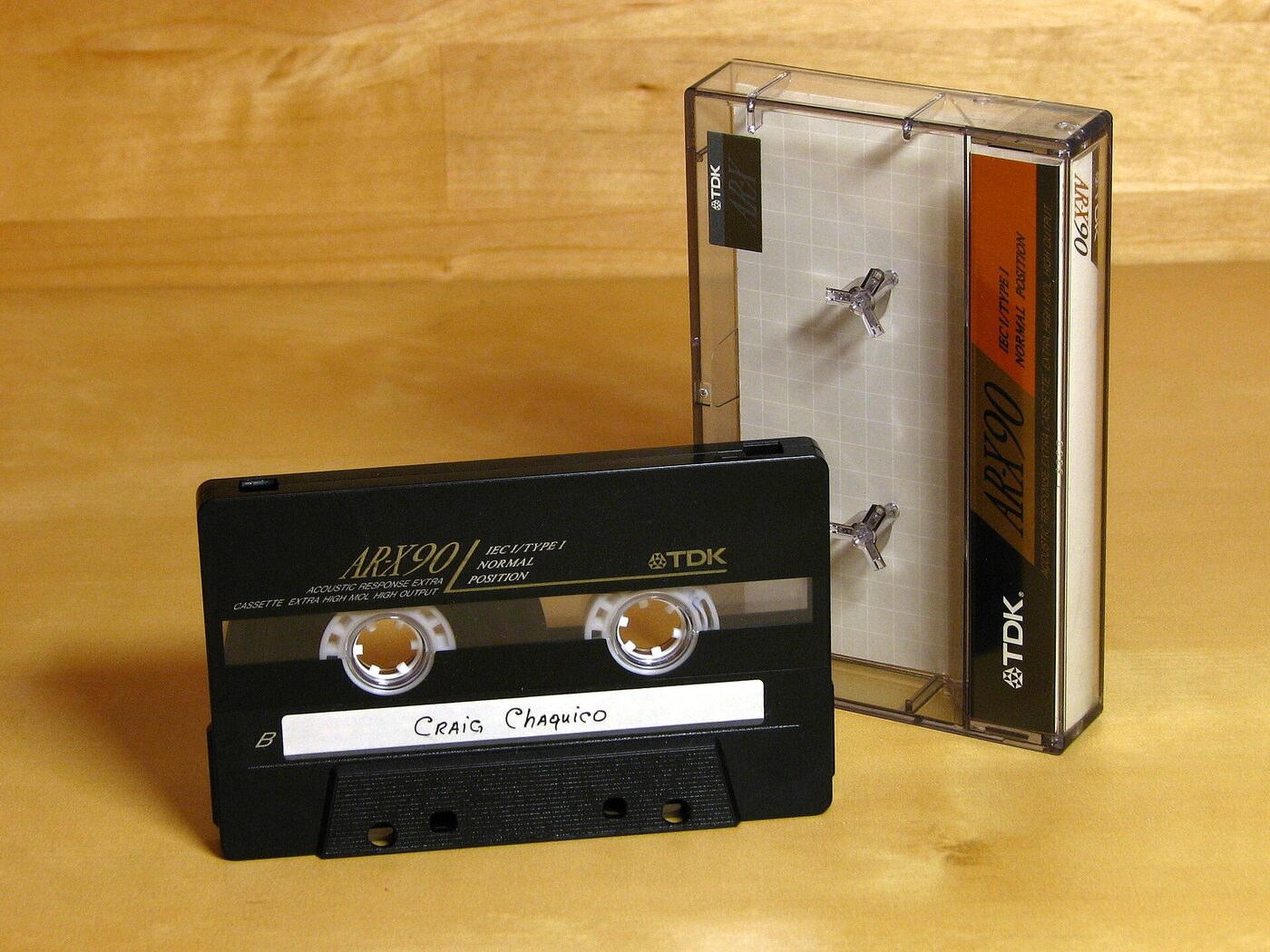

What country fans traded reflected the genre's history with broadcasting: air-checks and old radio material from a genre whose central institution had been a radio barn dance, concert tapes, and — a category with real weight in this genre — commercial recordings that had simply never been reissued. Country's back catalogue moved onto compact disc slowly and selectively, and for a great deal of it in the 1990s a cassette dub of somebody's LP was not piracy so much as the only available format. The culture had an expiry date built in: once MP3s and CD burners arrived at the end of the decade, the postal economy of blanks, generations and want-lists wound down within a few years.
Old country versus new: the argument that powered it
Underneath all the daily traffic ran the definitional question — what counts as country at all — and the 1990s kept supplying it with fresh test cases: pop crossovers, radio-templated “hat acts”, dance remixes of country singles, and a chart increasingly filled by artists whose relationship to the genre's history was, in the traditionalists' reading, a wardrobe decision. Every genre group on Usenet had a version of the authenticity argument; this group had the misfortune, or the luck, of hosting it during the exact years when the commercial stakes were highest and the evidence arrived weekly.
The positions deserve honest statement, because both were seriously held and neither was stupid. The traditionalist case: radio consolidation and the “young country” format were purging the back catalogue from the airwaves, so that a genre uniquely proud of its lineage was raising an audience that had never heard the people the current stars were imitating; the hat acts were interchangeable by design; and success on these terms was the genre dissolving, not thriving. The modernist case: country had absorbed outside influence in every generation and been accused of dying each time — Jimmie Rodgers took from blues and pop crooning, the Nashville Sound of the late 1950s buried fiddles under string sections precisely to chase the pop audience, and the countrypolitan records the traditionalists now defended had been the sellout of their own day; forty million people finding the genre was not a catastrophe requiring explanation.
From mid-decade the argument acquired a third party. Alt-country — the loose insurgency of punk-schooled bands playing hard-country and string-band material — gave the traditionalist position a contemporary banner rather than a purely archival one, and it acquired its own journal: No Depression, founded in 1995, its title reaching back through an Uncle Tupelo album to a Carter Family song, along with its own mailing lists and, shortly, websites. Genre discussion that had briefly concentrated in a handful of places dispersed across many, and some of the group's most committed traditionalists increasingly had somewhere else to be.
The argument was never resolved, because it is not resolvable: it is a dispute about what a word owns, conducted by people with sunk costs on both sides. As the group's permanent argument it behaved the way permanent arguments do — the same debate recurring under fresh subject lines, each new single or award show serving as the formal occasion, veterans announcing their fatigue with the topic at length and thereby extending it. An archive reader can drop into almost any month of the group's busy years and find it running. That persistence is not a defect of the record; it is the record. Few sources document so plainly what the genre's own audience thought was at stake in its biggest decade.
Neighbours, spin-offs and refuges
The group did not hold the whole territory forever. Old-time music — the pre-bluegrass southern string-band repertoire — received its own group in January 1995, when rec.music.country.old-time was created with the one-line charter “Southern fiddle/banjo music and beyond”, so that clawhammer banjo threads would not have to compete with the Nashville chart for attention. Bluegrass, meanwhile, had largely settled its online discussion on e-mail lists rather than Usenet, though the alt.* hierarchy carried a group as well — see alt.music.bluegrass — which is why library guides of the period so often paired listservs with newsgroups when mapping this corner of the music.
And for those on the losing end of the radio dial, the alt.* hierarchy provided a refuge where the old-versus-new argument was simply settled in advance: alt.music.country.classic, the group for the genre's pre-boom catalogue, whose own story is told on its page.
Why a library guide cites a newsgroup
Readers arrive at this page from university library research guides, which filed the group among resources for the genre alongside journals, discographies and mailing lists. The placement is less eccentric than it may look. A newsgroup archive is a primary source in the strict sense: contemporaneous, unedited, dated to the minute, and produced by the audience rather than about it. Nearly everything else that survives from the 1990s about country music's reception — reviews, trade-press coverage, radio ratings — passed through an editor or a marketing department. The newsgroup did not. A researcher who wants to know how the genre's own listeners received the Brooks-era explosion in real time, what an ordinary fan in 1994 thought counted as country, or how news of a singer's death travelled through a fan community before social media, can read it happening here, threaded and timestamped. (What Usenet was, for readers new to the medium, is explained on this site's primer.)
The usual caveats apply, and applying them is the researcher's job rather than the archive's. The posting population was self-selected twice over — online in the 1990s, and motivated enough to post — which skews it away from the genre's actual audience in ways that are hard to quantify; the loudest voices are overrepresented, as in every forum; and the later years of the archive are diluted by spam. None of this is unusual for a primary source. Letters columns, fanzines and broadside ballads carry the same defects, and historians use them anyway, with care. The group's archive belongs in that company: not a survey of country fans, but a very long, very candid transcript of some of them.
Thinning out, and what remains
The later history is the standard one for unmoderated groups, and it can be told briefly. Traffic thinned through the 2000s as posters moved to web forums, artist message boards and eventually social platforms, which offered moderation, images and the artists' own presence — things a text newsgroup could not match. An increasing share of what still arrived was automated, and the ratio of spam to conversation eventually inverted. There was no closing ceremony; groups like this one do not end, they trail off, and the trailing off is itself visible in the archive for anyone who wants to watch a medium empty out in real time.
The record survived the decline, though unevenly. Deja News began systematically archiving Usenet in 1995, in the middle of the group's busy years; Google acquired that archive in 2001 and extended it back toward Usenet's beginnings by folding in older tape collections, which is why coverage of the group's earliest years is patchier than coverage of its peak. What remains is nonetheless most of the group's active life: the obituary threads, the discography corrections, the tape-trade negotiations, and above all the argument — a large, argumentative audience talking about this music, at length and in its own words, during the years when Usenet was where such talking happened. The name on the door still says “western”. Nobody ever got around to changing it, which is, in its way, the most Usenet fact about the whole group.
Reading rec.music.country.western today
- Historical archive: Google Groups — rec.music.country.western (coverage varies by group and era).
- Open in a newsreader:
news:rec.music.country.western— the original site offered exactly this link, and it still works if your system has a newsreader registered for thenews:scheme. - Live access: point an NNTP newsreader at a modern server — see accessing Usenet today.
- The original news2mail e-mail subscription service ended in the mid-2000s and no longer operates.