comp.soft-sys.math.maple
The Maple computer algebra system.
Discussion of Maple: symbolic computation, plotting, numerical quirks and worksheet techniques, frequented by mathematicians, engineers and students — university course pages cited this group as the place to ask.
Threads comparing Maple with Mathematica and the free CAS world track the field’s evolution release by release.
On this page
Three weeks in late 1980
The software this group existed to discuss began with a purchase that never happened. Late in 1980, researchers at the University of Waterloo met to consider buying a computer powerful enough to run Macsyma, the Lisp-based system that then defined computer algebra. The machine was beyond their means, and the meeting resolved instead to write a new system — one that would run on the kind of hardware a mathematics department actually owned. The project took the name Maple, a reference to its Canadian home, and it grew inside the university's Symbolic Computation Group under Keith Geddes and Gaston Gonnet.
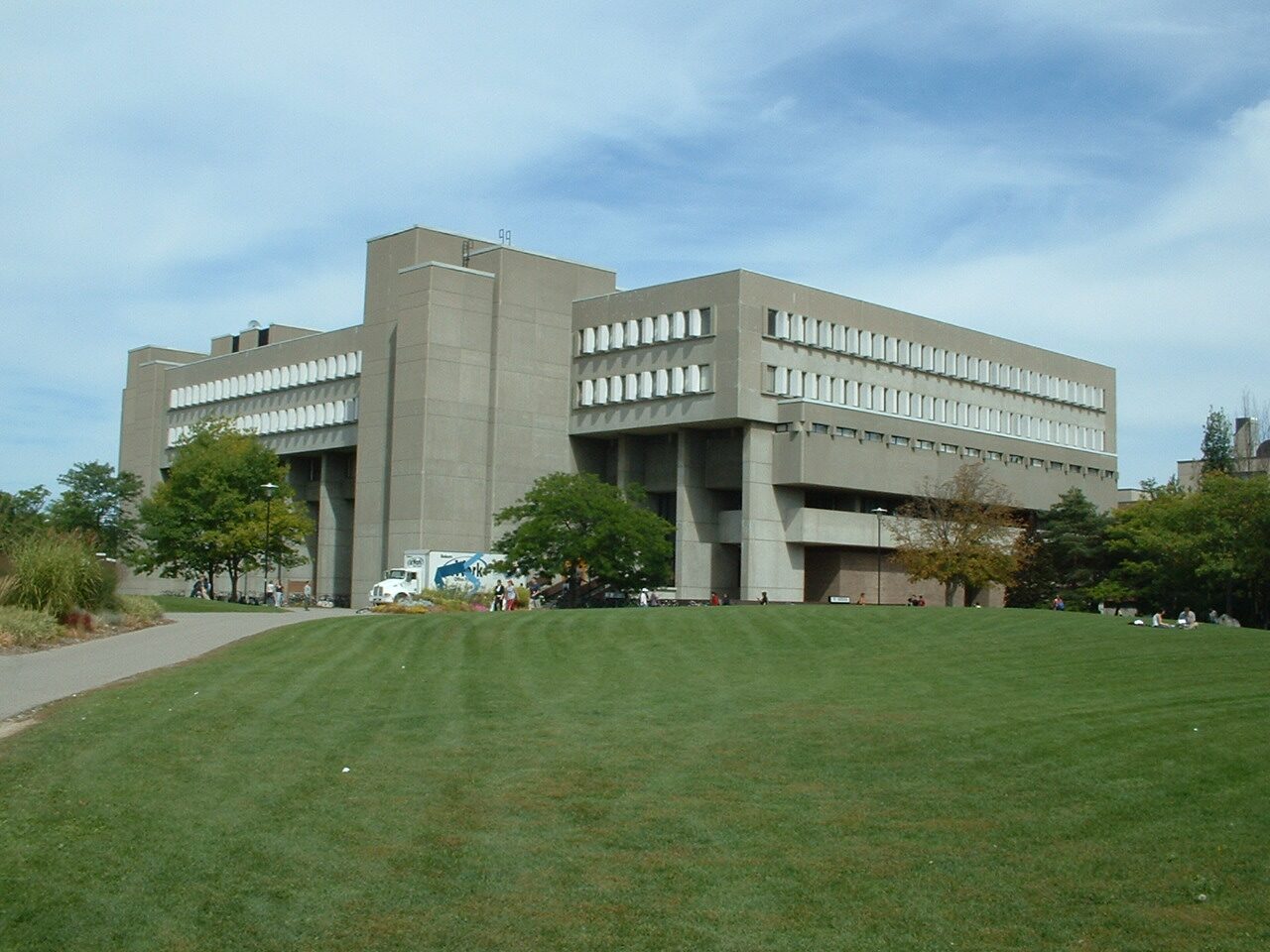

Portability was the founding constraint, and it dictated the tools. Maple was written in languages of the BCPL family — initially a subset of B alongside C, before settling on C alone — precisely so that it would not be chained to the large timeshared machines that Lisp systems then demanded. A first limited version was reportedly running within about three weeks of the meeting; fuller versions entered mainstream use from 1982, and the system spread through university computing at a pace that vindicated the original decision.
Commercial distribution came in stages. In 1984 the research group arranged for Watcom Products, another Waterloo offshoot, to license and distribute the system, and Maple 3.3 of 1985 became the first version the public could buy. In April 1988 Geddes and Gonnet incorporated Waterloo Maple Software — the company that later traded as Maplesoft — initially just to manage distribution, though it eventually built a research and development operation of its own while development also continued in university laboratories, the Symbolic Computation Group among them.
A kernel and a library
The design that emerged from those constraints outlived every fashion of the following decades. Maple is built as a small kernel written in C, which implements the language, the basic arithmetic and the core data structures — symbolic expressions are stored internally as directed acyclic graphs — while nearly everything a user actually touches is provided by libraries written in the Maple language itself. The kernel stays small; the library carries the mathematics.
The arrangement mattered daily on the newsgroup, because most of the library ships with viewable source. A user who wondered what a library routine was really doing could print the procedure and read it, which gave discussion of Maple's behaviour an unusually empirical grounding: a claim about what the system did could, in many cases, be settled by looking at the code responsible for doing it. Questions about the language and questions about the mathematics were therefore never far apart, and the group's traffic reflected that from the beginning.
Numerical work was the acknowledged weak flank of the early symbolic systems, and Maple's eventual answer was to buy rather than build: the system came to delegate serious floating-point computation to established outside code, most prominently the NAG numerical libraries, an integration that arrived with Maple 6 as 1999 turned into 2000, with the ATLAS linear-algebra and GMP multiple-precision libraries also doing duty in later versions. A system born because Macsyma's hardware was unaffordable ended up, two decades on, bundling some of the most venerable numerical software in existence.
Waterloo Maple and the release rhythm
Graphical interfaces arrived with the workstation era. A first GUI shipped with Maple 4.3 for the Macintosh in 1989; X11 and Windows versions followed in 1990 with Maple V, the release whose name carried the system through the decade. Maple V Release 2, in 1992, introduced the worksheet — text, typeset mathematics, input and plots combined in one document — which became the system's signature and, in due course, one of the newsgroup's perennial subjects.
Maple V settled into campus site licences and undergraduate teaching through Release 3 (1994), Release 4 (1996) and Release 5 (1997), which is precisely why a public place to ask questions became worth having. The renumbered Maple 6 folded in the NAG libraries; Maple 7 (2001) and Maple 8 (2002) followed on a nearly annual rhythm that the group's release-watchers could set their calendars by.
Then came the interface schism. Maple 9, in June 2003, introduced a new standard interface written largely in Java, running alongside the older classic worksheet. The new interface was criticised in the trade press for its speed, and the criticism was slow to fade — Maplesoft's own documentation as late as Maple 11 (2007) still recommended the classic interface to anyone with less than 500 MB of memory. Gonnet, in a 2005 oral-history interview, acknowledged that Maple had lost significant market share over the preceding decade to competition with a stronger user interface. Maple 10 (2005) brought a new document mode, and the repair work continued release by release; in September 2009, well past the period in which such groups were most used, Maplesoft was acquired by the Japanese firm Cybernet Systems.
Every stage of this history left a stratum in the group's archive: worksheet-format questions from the Maple V years, NAG-related numerics questions after Maple 6, and a long seam of interface complaint from 2003 onwards. Version milestones are the natural chronology of a vendor-adjacent newsgroup, and this one can be dated by its grievances.
The field it grew up in
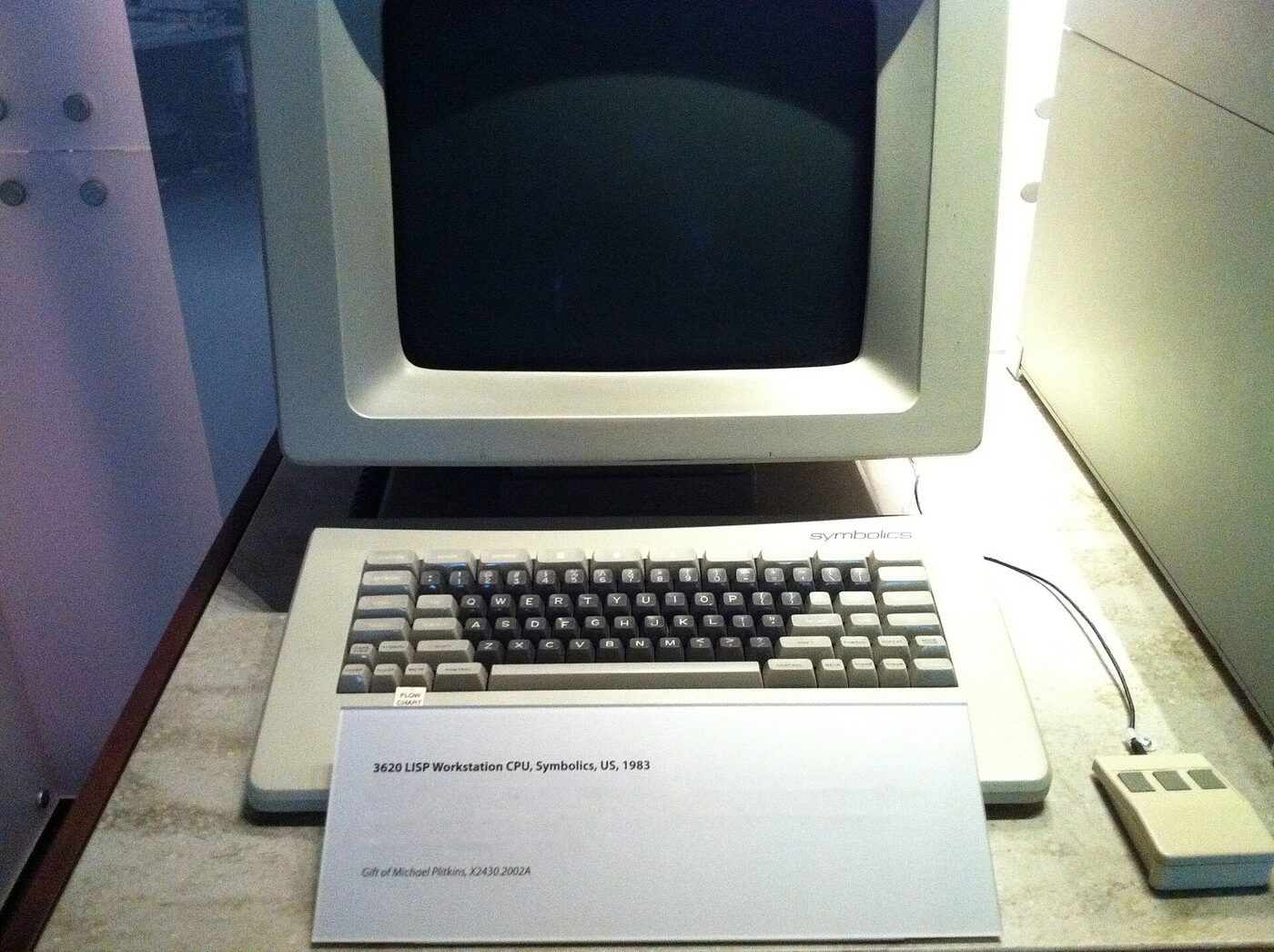
Computer algebra was already old when Maple began. Macsyma, the system Waterloo could not afford, had been under development at MIT's Project MAC since 1968, initiated by Carl Engelman, William A. Martin and Joel Moses; in 1982 it was licensed to the Lisp-machine maker Symbolics and became a commercial product whose fortunes were shackled to some of the most expensive hardware in the industry — the exact bet Maple's founders had declined to make. Its decline was steep: by one published estimate its share of the symbolic mathematics market fell from 70 per cent in 1987 to 1 per cent in 1992. The 1982 version deposited with the US Department of Energy was eventually released under the GPL in 1999 as Maxima, a free descendant that outlived its commercial parent.
.jpg)
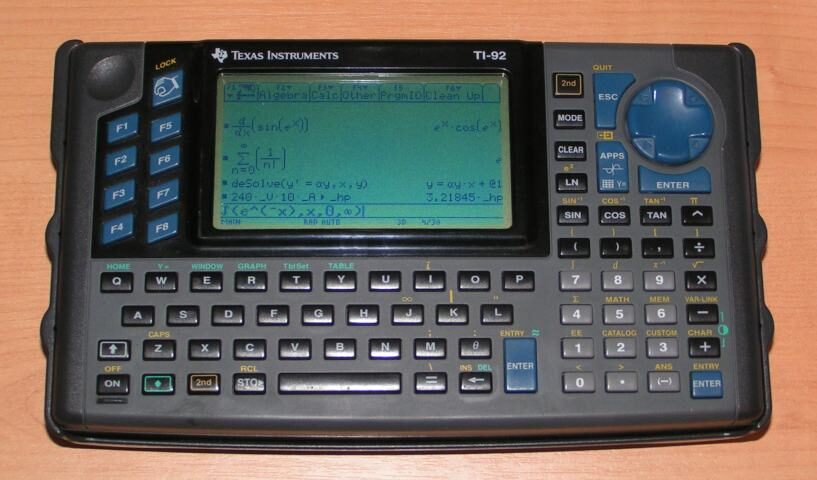
REDUCE, begun by Anthony Hearn in 1963 with physicists in mind, was older still and carried on quietly for decades before being open-sourced in 2008. Derive, from the Soft Warehouse in Honolulu, took the opposite tack from the mainframe tradition: a successor to muMATH, first released for MS-DOS in 1988, it ran happily on modest PCs and ended up, in trimmed form, inside Texas Instruments calculators — the TI-92 of 1995 put a Derive-based computer algebra system in a schoolbag.

And on 23 June 1988, Wolfram Research released Mathematica 1.0. Its notebook front end, integrated graphics and formidable marketing reset expectations of what a mathematics system should look like, and the market consolidated with remarkable speed: by the early 1990s it had effectively standardised on Mathematica and Maple, with everything else pushed into niches. For Maple the rivalry was formative — the worksheet, the interface rewrites and the steady release cadence all belong to a two-horse race — and on the newsgroup it was simply ambient: comparison threads, benchmark skirmishes and which-should-my-department-buy questions ran for as long as the group did.
Ten years of the Maple User Group
Maple's community infrastructure predates the newsgroup by more than a decade, and its lineage is unusually well documented, because the man who started it later wrote it down in a formal proposal. The Maple User Group was an electronic mailing list started around 1989 by George Labahn and run from a University of Waterloo machine, with a membership that the 1999 newsgroup proposal put in the thousands. It was moderated only in the lightest sense: a member of the university's Symbolic Computation Group redirected minor bug reports and purchasing queries to the right addresses, and otherwise messages supportive and critical of Maple were, by the proposal's own account, given equal treatment.
Alongside the list, Maple's developers published a technical newsletter, MapleTech. Maple-specific traffic was meanwhile accumulating somewhere less welcome. The newsgroup sci.math.symbolic had carried discussion of computer algebra systems in general since the 1980s, as a forum for the mathematics and algorithms of the field as a whole; by the late 1990s, discussions dealing purely with Maple had become — in the words of the same proposal — a common occurrence there, to nobody's particular satisfaction.
By 1999 the arithmetic favoured a newsgroup. Mailing lists filled mailboxes; newsgroups could be read through the web or any newsreader, at the reader's own pace; and the precedents — comp.soft-sys.matlab for MATLAB, and a moderated comp.soft-sys.math.mathematica in existence since April 1995, voted in by 573 to 143 — showed where vendor-specific traffic naturally belonged. Labahn proposed that his own decade-old mailing list be wound up in favour of the new group.
Voted in, 207 to 25
The result is a newsgroup with a paper trail most groups lack. Labahn posted the formal Request for Discussion on 29 July 1999, crossposted to news.announce.newgroups, news.groups, sci.math.symbolic and sci.math. It made its case with the confidence of a proposal that knew its audience existed: Maple, it said, was available under campus-wide arrangements at well over 400 universities, had an estimated million users, and was the subject of over 300 published books — the proponent's figures, offered as evidence that a dedicated group would not want for readers.
A second RFD followed in October 1999, and in January 2000 a neutral votetaker — Dave Cornejo of the Usenet Volunteer Votetakers — issued the Call for Votes under the standard procedure of the Big-8 hierarchies, whose workings are part of the wider story told on our comp.* page. Voting closed on 24 January 2000; the result, announced on 1 February, was 207 in favour and 25 against from 232 valid ballots, with 4 abstentions and 2 invalid ballots — comfortably clearing both thresholds, two-thirds in favour and at least 100 more yes than no. The published voter roll is itself a small portrait of the community: Keith Geddes voted, as did seven posters from Maplesoft addresses, Manuel Bronstein of INRIA, and Richard Fateman of Berkeley, a Macsyma veteran — alongside the twenty-five, several of them academics, who thought the group unnecessary. David C. Lawrence, the hierarchy's group administrator, sent the newgroup control message on 7 February 2000, and comp.soft-sys.math.maple existed.
The proposal also took some care over taxonomy, of the kind Usenet's group-creation process encouraged. Maple, it argued, belonged under comp.soft-sys.math rather than anywhere in sci.*, because the comp.soft-sys groups dealt with particular software systems — the RFD compared the branch to comp.ai and comp.graphics — while the sci.math groups dealt with algorithms and theory rather than products. The one-line description that went out to every site's newsgroups file was accordingly modest: Maple computer mathematics discussion group.
The newsgroup comp.soft-sys.math.maple is intended to focus on programming, algorithms, packages, worksheets, and third party programs for users of the Maple computer algrebra system.
That is the charter as the control message carried it to news servers around the world, misspelling of algebra included — a small permanent monument to the fact that Usenet's founding documents were typed by humans in a hurry. The rest of the charter welcomed announcements of new textbooks and products, discouraged binaries and commercial advertising, and declared the group unmoderated: the proponent reasoned that the web now handled pricing and ordering enquiries, so little remained that moderation would need to filter.
The date deserves a moment's notice. Maple was nearly twenty years old and six major versions deep when its newsgroup was created, and the Mathematica group had existed for half a decade. A February 2000 creation makes comp.soft-sys.math.maple one of the later arrivals in its hierarchy — born into Usenet's late afternoon, after the web had begun draining the medium but before anyone had built the web forum that would eventually replace it.
What was discussed
A steady share of the traffic concerned the Maple language itself rather than any mathematics. Procedures, evaluation rules, the distinction between eval and subs, and error messages of Delphic brevity all produced recurring threads, as each cohort of new users discovered that a computer algebra system is also a programming language with firm opinions. Regulars answered the same questions patiently, and the answers were often short annotated fragments of code.
The charter's list — programming, algorithms, packages, worksheets and third-party programs — is the scope the group was created to cover. Worksheets circulated as the group's natural currency: a poster with a problem attached the offending input, a respondent returned a corrected fragment, and teaching material changed hands the same way. Announcements of third-party packages and new textbooks were explicitly welcome under the charter, and appeared alongside the questions without much friction, since a group serving a commercial product had long since made its peace with the existence of commerce.
Mathematical questions typically arrived filtered through the machine: an integral returned in an unfamiliar form, a simplification that refused to happen without the right assumptions, a differential equation solved in terms the textbook never mentioned. The recurring lesson, delivered thread after thread, was that an answer differing from the expected one is not necessarily wrong — branch cuts, unstated assumptions about signs, and equivalent forms accounted for a great many alarmed first posts.
Occasionally the traffic was research-grade. In November 2000, months into the group's life, Manuel Bronstein — one of the leading figures in symbolic integration — posted on the group about a notorious algebraic integrand, x/sqrt(x^4+10*x^2-96*x-71), whose elementary antiderivative the systems of the day famously struggled to find; the example had circulated since Henri Cohen offered it to sci.math.symbolic in December 1993 as a Christmas present for one's favourite computer algebra system. Wikipedia's article on the Risch algorithm cites Bronstein's post to this group to this day — a newsgroup message doing service as a mathematical reference a quarter of a century on.
The rest was practicality: getting worksheets to print sensibly, exporting mathematics to LaTeX — a concern shared with the readers of comp.text.tex — and plots to something a journal would accept, differences between platforms, and memory exhausted by an injudicious loop. Students posting assignments verbatim were a fixture, and the customary response was the settled etiquette of the technical newsgroup: help with the Maple, not with the homework, a distinction the regulars enforced with varying degrees of patience.
Vendor-adjacent, unmoderated
The group was unmoderated, and its regulars included Maplesoft staff alongside academics who had used the system since its research days — which meant a well-posed question could draw an answer from someone with a hand in the code concerned. The company never owned the group and could not edit it; what it could do was read it, and answer. The contrast with the sibling group was pointed: comp.soft-sys.math.mathematica had been moderated from its creation in 1995, while the Maple group's proposal reasoned that with pricing and ordering enquiries diverted to the web, nothing remained that a moderator was needed to keep out — a bet on its readers' manners that, by the standards of unmoderated Usenet, largely paid off in the traffic that survives.
That arrangement, common to the vendor-adjacent groups of the era, had a characteristic economy. Users got expertise no support contract could promise, at the price of no guarantee that anyone would answer at all. The vendor got an unfiltered public record of what its customers actually struggled with: bug reports triaged in the open, workarounds circulating ahead of official fixes, and complaint delivered without the softening that a support ticket invites. Version upgrades made the group loudest — the Java interface of Maple 9 generated the predictable volume of comment, much of it from people who preferred the classic worksheet and said so at intervals for years.
The one thing a vendor-adjacent group could not be was a house organ. Posts critical of the product sat in the same threads as posts from people who built it, and the group's value to its readers — including the universities that linked to it — rested precisely on that arrangement.
Why a course page linked a newsgroup
Maple's spread through undergraduate teaching created a support problem no department could staff: thousands of students meeting a symbolic system for the first time, each discovering the same twenty pitfalls in a fresh order. Course pages of the late 1990s and 2000s solved it with a link — to the manual, to the local site-licence instructions, and to comp.soft-sys.math.maple, the place where the same questions had already been asked and answered in public. Citing a living community resource as courseware was normal practice at the time, and this group made an unusually good citation: active, archived, and read by people who knew the system from the inside.
Some of those links have outlived everything around them. University pages written when Maple 6 was new still point at this group, long after the newsreader software they assumed disappeared from campus machines. Gateways such as news2mail, described on the front page, carried the group into ordinary mailboxes for readers whose institutions had retired their news servers, which is part of how such citations kept working after Usenet stopped being standard furniture.
MaplePrimes and the afterlife
The successor was built by the vendor, in stages. The name MaplePrimes was in use by 2002 for a customers-only corner of Maplesoft's site, offering add-on packages to holders of maintenance contracts; in late 2005 the company relaunched it as an open web community, with member blogs and moderated forums, announced with the stated purpose of letting Maple users share experiences, tools and applications directly with one another. Support traffic migrated there as it migrated everywhere from Usenet to vendor-run sites: searchable, reachable without a newsreader, and under the vendor's eye. MaplePrimes remains the centre of Maple's user community today, and the release announcements that would once have gone to this group appear there instead.
The group's decline needs no Maple-specific explanation: it emptied on roughly the same schedule as the rest of comp.*, as spam rose, institutional news servers were switched off, and each new cohort of users arrived already at home on the web. What is specific to Maple is how orderly the succession was — a community that began as a Waterloo mailing list in 1989, passed through a voted-in newsgroup in 2000, and settled onto a vendor forum in 2005, each stage documented, none of it lost by accident.
What remains is a usable record. Because contributors quoted their input and output directly, the archive documents how the system actually behaved, release by release, in a way the manuals do not — which worksheet format an old file assumes, what a given version's integrator could and could not manage, which error message meant what. That is worth knowing for anyone excavating an old worksheet; it is how a newsgroup post came to be cited in an encyclopaedia article on integration algorithms; and it is a large part of why links to this group have outlived the medium that carried it.
Reading comp.soft-sys.math.maple today
- Historical archive: Google Groups — comp.soft-sys.math.maple (coverage varies by group and era).
- Open in a newsreader:
news:comp.soft-sys.math.maple— the original site offered exactly this link, and it still works if your system has a newsreader registered for thenews:scheme. - Live access: point an NNTP newsreader at a modern server — see accessing Usenet today.
- The original news2mail e-mail subscription service ended in the mid-2000s and no longer operates.