alt.nl.support
Dutch-language support groups (alt.nl branch).
The alt.nl.* branch carried informal Dutch-language groups alongside the official nl.* hierarchy; this support room served personal and practical topics in Dutch.
Dutch forum archives still link the address — kept as a directory entry for the Netherlands slice of the gateway’s catalogue.
On this page
- What the record contains, and what it does not
- How the absence was checked, and what a negative is worth
- A group, or a branch node? What the name is doing
- The nine groups beneath the name that did leave a record
- The branch that began by being vetoed
- The shape of the branch, counted
- What the alt side of the Dutch split actually meant
- Why a Big-8 group leaves paper and an alt.* group can leave none
- The rmgroup as a veto, and the alt.config convention
- Why the list only ever grows
- The general-purpose support room, in Dutch
- What an active file does not record
- Scope and limits
What the record contains, and what it does not
Most pages in this directory begin with what a newsgroup was. This one has to begin with what can be shown to have existed at all, because alt.nl.support has left almost no documentary trace, and the honest account of that absence is more useful than any reconstruction that could be built around it.
The working record of what exists on Usenet is kept in a small number of public files, and the Internet Systems Consortium mirrors all of them. There is an active file and a matching newsgroups file, which together list every group the consortium believes to be publicly available, with its one-line description. There is an archive of control messages, arranged by hierarchy and then by group name, holding the valid newgroup and rmgroup messages the archive has received since early 1991; checkgroups messages are filed separately by year, and an older archive of the same material is kept alongside the current one. There is a monthly log of what the archive did with each message it saw, running from May 2003 to the present. And, for the Big Eight, there is a separate archive of the proposals, ballots and results that preceded a group’s creation. These are the instruments this directory uses on every other page.
Checked against all of them in August 2026, alt.nl.support is not there:
- It is absent from the consortium’s
newsgroupsfile, which currently lists 45,003 groups, 20,466 of them in alt.* and 204 of them under alt.nl. - It is absent from the matching
activefile, with the same counts. - The current control-message archive for the alt.* hierarchy holds 36,208 files, one per group name that has ever produced a valid control message. Two hundred and twenty-two of them are alt.nl or alt.nl.something. None of them is alt.nl.support, and the URL where such a file would sit returns 404.
- The older archive kept beside it, a pre-reorganisation copy of the same collection, lists 190 alt.nl names, among them eight of the nine groups described below. It has no alt.nl.support file either, and that URL returns 404 as well.
- The monthly logs, 280 files covering May 2003 to August 2026, contain the string alt.nl.support exactly ten times, and on every occasion it is the leading part of alt.nl.support.alcoholisme. The parent name is never logged, not as an action taken and not as a message rejected.
- The 655 archived control messages that do concern the alt.nl branch, downloaded and searched in full, never mention alt.nl.support either, in a Newsgroups header, a Control header or a body.
- The Big-Eight proposal archive has no entry, and structurally could not have one: it carries a directory for each Big-Eight hierarchy and none for alt.
So there is no newgroup message, no rmgroup message, no listing line and no proposal. What follows sets out how those checks were made and what they are worth, what the record does hold for the names immediately around this one, and why an alt.* group can vanish in a way that a Big-8 group structurally cannot.
How the absence was checked, and what a negative is worth
The method is not this page’s invention. The file that tells a news server whose control messages to obey, control.ctl, is distributed with the INN news server and mirrored at the consortium, and its section on alt.* contains a paragraph of advice to administrators that reads, in part:
One good initial filter is to check the archive of control messages for a requested group to see if a syntactically valid newgroup message was issued. Many of the junk control messages are invalid and won’t be archived, and many sites will only add alt.* groups with valid control messages. To check the archive, see if ftp://ftp.isc.org/pub/usenet/control/alt/<group-name>.gz exists (replacing <group-name> with the name of the group).
That is precisely the test performed above, on the file’s own terms, and for this group name the answer the file anticipates — the file exists, read the first and last few messages to see whether the group should be moderated — does not arrive. There is nothing to read.
A negative result deserves its caveats stated as plainly as the result itself, and the archive states them for us. Its policy document notes that the collection began at Rensselaer, moved to UUNET in the autumn of 1992 and later to the consortium; that about a month of messages around August 1992 is missing; and that, since Usenet propagation is imperfect and so is the archiving software, no guarantee is made that the archive is full and complete. It also archives only valid messages, where valid means, among other things, a correctly formed article carrying an Approved header, no larger than 64KB for a newgroup or rmgroup, with a group name made only of the permitted characters.
There is a second and more fundamental caveat, which is the whole character of the hierarchy. In alt.*, a group exists on the servers whose administrators chose to carry it and nowhere else. The consortium’s files are one very well-placed observation post, not the network. A group can in principle have been created on a handful of Dutch servers by a message that never reached the archive, carried a while, and disappeared without ever appearing in any of the files above.
The alt.nl branch also supplies a caution about how easily a single lookup misleads. Six of the 204 alt.nl entries in the current active file have no file in the current control archive — five whose names are eight hexadecimal digits, and one whose final component is com — and it would be tempting to write that up as six groups created without any surviving message. All six turn up in the older archive — the five hexadecimal ones filed there under the uppercase names their control messages actually used, which the current archive’s validity rules, forbidding uppercase components, would no longer accept. Twenty-three alt.nl names go the other way: they have an archived control message and never reached the active file at all. The two listings and the two archives are independent of each other, and none of them is complete on its own. What can be said, and is worth saying exactly, is that alt.nl.support is missing from all four, while the branch around it is documented in all four.
A group, or a branch node? What the name is doing
The directory entry above describes this address in the plural — Dutch-language support groups, alt.nl branch — and that plural is probably not careless. Newsgroup names are hierarchical strings, and a string can name a group, or a level of the tree with groups beneath it, or both, and nothing in the syntax distinguishes the cases.
The record does hold nine groups whose names begin alt.nl.support, and they are described in the next section. On that reading, alt.nl.support is a branch node with children and no group of its own, which is an entirely ordinary state of affairs. The Dutch hierarchy proper offers the exact parallel: nl.support has fifteen groups under it and there is no group called nl.support. The English-language equivalent in alt.* goes the other way — alt.support exists as a group in its own right, with the description “Looking for support in general.”, and 301 groups beneath it.
So both patterns are common, and the record does not settle which one applies here. What the record does settle is narrower and firmer: whatever the gateway’s subscriber typed, and whatever Dutch forum archives are pointing at when they cite the address, no group of exactly that name has ever been listed by the consortium or produced an archived control message. This page therefore treats alt.nl.support as an address in the branch rather than as a documented group, and does not describe traffic, membership or subject matter for it, because none is recorded anywhere consulted here.
The nine groups beneath the name that did leave a record
Where the parent is silent, the children are surprisingly loud, and everything in this section comes from control messages archived at the consortium and readable in full. All nine are listed in the current active file, and their descriptions there are the descriptions their creators wrote:
- alt.nl.support.overlijden — “Support bij overlijden.”, support in bereavement.
- alt.nl.support.relaties — “Support bij relatieproblemen.”, support with relationship difficulties.
- alt.nl.support.ziekten.algemeen — “Support voor zieken.”, support for the ill.
- alt.nl.support.luddevudduh — “Huil hier uit over het verlies van je geliefde...”, cry it out here over the loss of the one you love. The newgroup message carries a
Keywordsheader pairing the invented name with liefdesverdriet, heartbreak. - alt.nl.support.daklozen — “Discussieplatform voor daklozen.”, a discussion platform for homeless people.
- alt.nl.support.goed-voornemen — “Om achter de vodden gezeten te worden.”, roughly, to be kept up to the mark; a group for good resolutions.
- alt.nl.support.alcoholisme — “Dutch group about problems around alcoholism”, the only one of the nine whose listed description is in English.
- alt.nl.support.borderline — listed as “No description.”, for reasons the archive makes plain and this section returns to.
- alt.nl.support.mks — “Over het Mad Kees Syndroom (MKS) en WTT”; the rmgroups that followed dismissed it, among other things, as an acronym group.
Their creation dates run from December 1999 to May 2010. Two of them, overlijden and relaties, were issued fourteen seconds apart on 12 December 1999 from a single Dutch account, each carrying a full Dutch charter in the body. That account is not a stranger to this page: eighteen months earlier it had been the one to issue the rmgroup against alt.nl itself, which is a useful corrective to any picture of alt.* proposers and alt.* objectors as two separate populations. The bereavement group’s charter is worth reproducing because it is the longest piece of Dutch-language writing the whole alt.nl.support name has produced:
alt.nl.support.overlijden is een ongemodereerde nieuwsgroep voor alle onderlinge steun bij overlijden door alle mogelijke oorzaken (dodelijke ziekte, ongeval, ouderdom, euthanasie etc ). De groep is bestemd zowel voor mensen zelf die, naar zich laat aanzien, binnenkort zullen komen te overlijden, als voor de nabestaanden die achterblijven en het verlies moeten verwerken, begrafenissen moeten regelen, erfenissen moeten verdelen etc.
In English: an unmoderated group for mutual support around death from any cause — fatal illness, accident, old age, euthanasia and so on — intended both for people who expect to die shortly and for those left behind, who have to work through the loss, arrange funerals and divide estates. The charter goes on to welcome any other discussion touching on death and the meaning of existence, and to say that binaries and advertisements are unwanted.
What happened next is the part that matters structurally. Five of the nine drew an rmgroup, and four of those five drew it within hours. The December pair drew theirs a little over six hours after they were issued, from a signed alt.config removal account in Colorado, and the stated reason was not a defect in the proposals. It was, in full, that “Alt is for english newsgroups, this one is not.” The bereavement group had supplied a charter, a description line and a plausible readership; none of that was in dispute, and the objection was to the language. The general-illness group, newgrouped at 15:58 GMT on 11 March 2000, drew one from the same account at 18:06 the same afternoon, this time on the stock two-line ground of no charter and no traffic measurements. The heartbreak group, created shortly after midnight on 24 January 2000, drew the same two-line refusal before the end of the same morning. The fifth went to the acronym group of July 2002, arrived forty-three minutes after the newgroup, came from an account at a Dutch provider rather than from Colorado, and was sent five times over, once against each re-issue of the proposal, adding to the stock reasons that the name had not been discussed in alt.config.
Not all nine look like proposals at all. The borderline group was created by six newgroup messages carrying an identical Date header of 17:57:17 GMT on 2 June 2000, each with a different Message-ID, all six reaching the archive inside three minutes, each posted not to a Dutch group but to alt.test, and each with a body consisting of the required “For your newsgroups file:” line followed by the group name and nothing else. That is why the group is listed to this day with no description: there was never one to take. An rmgroup followed the next afternoon and changed nothing.
The two November 2001 groups were issued one second apart from one account, again into alt.test, and both carry charters. The homelessness charter offers to exchange tips about shelters and other things that matter to homeless people, and then proposes that for the group to succeed a large number of outdoor payment terminals would have to be converted into internet terminals from which alt.nl.support.daklozen could be read free of charge — which is a fair indication of the spirit in which it was written. The good-resolutions charter is drier and rather charming: participants may put pressure on posters to carry out the resolutions they have announced, resolutions that come across as unsympathetic or that aim only at personal amusement can expect little encouragement, and commercial advertising is unwelcome. Neither group drew an rmgroup. Both are still listed.
Only one of the nine was created late enough to appear in the consortium’s logs, and it shows the process working in a different register. alt.nl.support.alcoholisme was newgrouped on 20 May 2010 with a one-sentence charter, re-issued two days later with a longer one, and re-issued twice more, on 19 June and 11 July of the same year. The logs record what each attempt achieved: the first created the group, the second changed nothing, the third was logged as a description change, and the fourth repeated the third word for word and was logged as no change at all. Four control messages from one sender in under eight weeks, to settle the wording of a single line. It is the only alt.nl.support name for which the archive records that kind of care, and it arrived a decade after the first group appeared beneath the name.
The branch that began by being vetoed
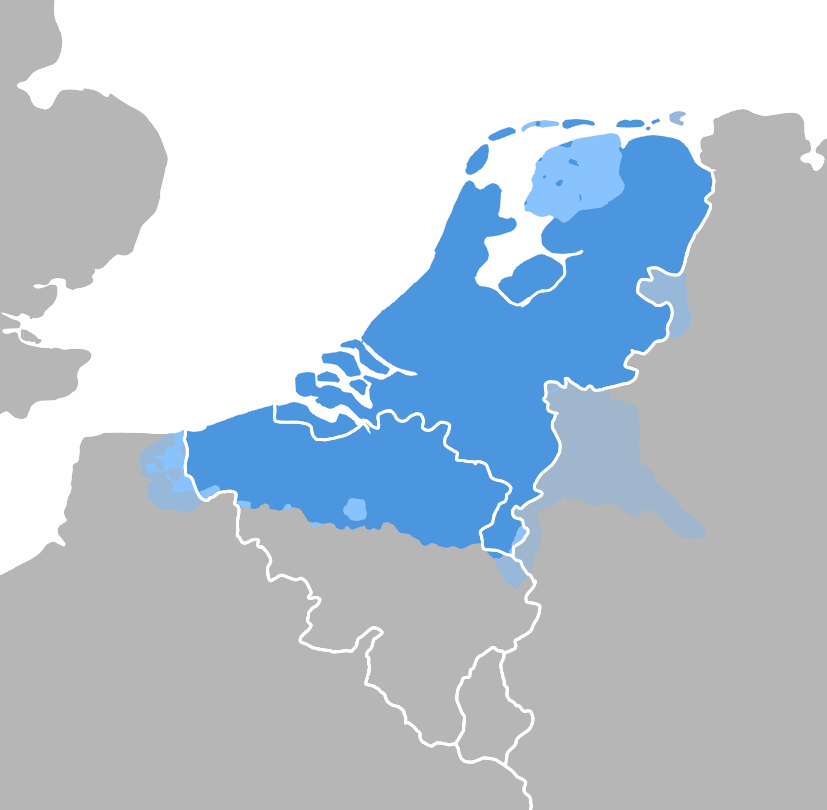
The alt.nl branch has a datable first day. On 2 June 1998 a newgroup message for the group alt.nl was posted from a Dutch account, cross-posted to alt.config as the convention required, and the entire body of the message read: “a new group for dutch people”.
Five days later a second Dutch poster answered it with an rmgroup, and the objections are worth quoting exactly, because, quoted verbatim, they amount to a compressed statement of what alt.* expected of a proposal even though it had no power to require anything:
- not discussed in alt.config
- creates a new 2 nd level hierarchie
- no charter
- no justification of readership
- no For your newsgroups file line
The veto did not take. The branch grew anyway, and it grew fast: the archive holds 655 control messages naming an alt.nl group, running from that June 1998 message to February 2013. Of the 655, 421 are newgroups and 234 are rmgroups, which is a ratio worth keeping in mind whenever alt.* is described as a place where anyone could create anything unopposed. The heaviest years are 1999 with 160 messages and 2000 with 157, followed by 2002 with 113. Volume then falls away steadily — 37 messages in 2003, 37 in 2004, and never more than 21 in any year after that — and the last archived control message for any alt.nl group is dated 6 February 2013. It was a newgroup for a proposed Dutch group about Android, with a bilingual charter about discussing every version of the operating system. It was archived; the group was never listed. Its body carried the very line whose absence the 1998 rmgroup had complained of, but carried it without its closing colon, and the log for that morning disposes of it in six words: no description in body of newgroup.
One late episode deserves recording for the record’s own sake. In February and March 2005 three newgroup messages for alt.nl were posted from a French account, each with a two-line body giving the description as “alt.nl En flamand.” Because the consortium’s newsgroups file takes each group’s description from the most recent control message it has seen, that is the description the Dutch branch’s top node still carries today, and so does alt.nl.test. The top of the Dutch alternative namespace is currently annotated, in French, as being in Flemish. No later message has corrected it in the twenty-one years since, and under the rules described below the entry itself cannot be taken out.

The shape of the branch, counted
Because the consortium’s files are machine-readable, the branch can be described by counting rather than by impression. There are 204 alt.nl groups in the current active file. Seventy-six of them carry the description “No description.”, meaning the newgroup that created them supplied a line the archive accepted but nothing worth keeping, or no usable description survived. Exactly four are marked moderated.
The larger sub-branches, by group count, are: markt with 21 groups for buying and selling, thirteen of them subdivided by computer component and five by Belgian province; verdomhoekje with 17; comp with 13; support with the nine described above; os and ftp with seven each; fan with five; kabel, gratis and audio with four apiece. Everything else is one or two groups deep.
The verdomhoekje family — the phrase in het verdomhoekje zitten means roughly to be in the doghouse, the one everyone blames — is the branch’s most distinctive feature and the one that most repays a moment’s care. Fifteen of its seventeen groups are named after individual people, and the surviving descriptions are insults, several of them truncated mid-sentence by the description line’s length. One target is identified in his group’s description as an nl-admin, the administrative role of the Dutch hierarchy proper, and two more sit under a newsadmins node. This page names none of them: they are private individuals, the groups exist only as strings in an active file, and there is no evidence in the record that any of them carried traffic. What is worth recording is the structural fact, which is that on the alt side of the Dutch split a quarrel could be turned into a permanent entry in a global namespace by one person in one message, and that the resulting entries are still there.
The five groups whose names are eight hexadecimal digits are not, as they look, the residue of a malfunctioning script. All five were created between 26 and 28 February 2000 by one sender, and the body of the first of them says why. The Dutch news administrators, it complains, seem to think they can carry and support the rogue alt.nl.* hierarchy, the signed rmgroups have no effect, and the branch is growing quickly — so from that day on, every rmgroup the sender issued against one particular alt.nl group would be accompanied by the creation of a randomly named group in the same branch until the question was settled. The message signs off: “No local hierarchies in ALT. Thank you for your cooperation.” The question was never settled, the campaign stopped after five names, and all five have been in the world’s newsgroups lists for twenty-six years. It is the clearest single demonstration on this page of what an unremovable namespace does with a grudge.
For scale, other national branches of alt.* run from the substantial to the vestigial: alt.fr has 1,100 groups and alt.pl 526, while alt.dk has 11, alt.es seven, alt.de four and alt.no three — alt.de being that small because German-language alternative traffic went to the separately administered de.alt branch instead. At 204 groups the Dutch branch sits in the middle: too large to be an accident, far too small to be a hierarchy. The computing groups in it include several on file-trading and intrusion whose surrounding scene is covered on this directory’s page for nl.comp.hacken.
What the alt side of the Dutch split actually meant
The nl.* hierarchy — its origins on the European end of the UUCP network, its named administrative address, its written creation procedure, its ballots and thresholds, its monthly signed audit and its periodic culls — is the subject of this directory’s page on the Dutch hierarchy, which names alt.nl.support as its example of the other side of the split. That page owns the nl.* story and it is not retold here. What belongs on this page is the other half of the sentence: what it meant, concretely, for Dutch-language traffic to accumulate in the international alt.* hierarchy instead.
The clearest statement of the difference is in control.ctl, where the two namespaces sit some fifteen hundred lines apart. For the Dutch hierarchy, the file instructs a server to drop every newgroup and every rmgroup from anyone at all, and then to honour newgroup, rmgroup and checkgroups messages from a single named administrative address, and only if they verify against a named PGP key whose fingerprint is printed in the file. For alt.*, the same file says: accept all newgroups, from anyone, except from the two addresses that issue Big-8 control messages and therefore never issue alt.* ones; and silently ignore all rmgroups.
Four things follow, and each of them bears directly on how much of this page could be written.
- No vote. There is no ballot, no quorum, no threshold and no votetaker, so there is no published tally with names and addresses in it — which, in the hierarchies that hold ballots, is often the single richest surviving document about a group’s founding.
- No administrator. There is no person or committee whose job is to keep the list, so there is nobody to have kept records, answered questions about them or handed them on.
- No checkgroups. The current
control.ctlcarries 246 checkgroups lines, naming the address and key entitled to audit each hierarchy’s list against reality. Not one of them is for alt.*. Every audited hierarchy therefore has a dated, signed statement of exactly which groups existed on a given day, going back years; alt.* has never had one, and so has no way to establish that a group existed at a moment in time. - No key, and therefore no forgery test. A signed hierarchy can say whether a control message was genuine. In alt.* the question has no answer, which is one reason the archive of unsigned messages is treated as evidence of what was sent rather than of what was authorised.
The consequence is not that alt.* was disorderly. It is that alt.* was not documented. Order, where it existed, was produced by administrators deciding one message at a time, and a decision taken privately on several thousand machines leaves no paper anywhere.
Why a Big-8 group leaves paper and an alt.* group can leave none
The contrast is easiest to see in the shape of the archives themselves. Alongside its control-message collection, the consortium mirrors the archive of the moderated group news.announce.newgroups, and that archive is organised into directories named comp, humanities, mailing.lists, misc, news, rec, sci, soc and talk, together with the group lists, guidelines, bogus-group lists and status reports the moderators posted. Ask it for an alt directory and it returns 404. It has never had one, because the process it documents never applied to alt.*.
What a Big-8 group leaves, when the process ran properly, is a chain of dated public documents: a Request for Discussion carrying the proposed name and the full charter text, often revised across two or three postings; a Call for Votes stating the opening and closing dates; a result with the tally and, in the older ballots, the voters listed by name so the count could be audited; and finally the signed newgroup control message. Later documents attach themselves to the same chain — moderator changes, vacancy notices, removals. This directory’s pages on the older hierarchies quote those documents at length precisely because they exist; the soc.* hub sets out the procedure that produced them.
An alt.* group’s entire documentary output, by contrast, can be a single message of about fifteen lines, most of them routing headers, with one line of description and — if the proposer was conscientious — a paragraph of charter. Several of the nine groups above are exactly that, and one of them is less than that. If the message was properly formed and reached the archive, the group has a record. If it was malformed, or was never seen by the archive, or was sent before the archive existed, the group has none at all, and no amount of later carriage will produce one retrospectively, because nothing in the hierarchy ever writes anything down a second time.
That is the whole explanation of what this page can and cannot say, and it generalises. A Big-8 group that lasted three months is better documented than an alt.* group that lasted fifteen years, and the difference measures the paperwork rather than the community.
The rmgroup as a veto, and the alt.config convention
The mechanics are specified, if thinly. RFC 5537, the November 2009 standard for Netnews architecture and protocols, defines the control message and its two relevant commands: a newgroup message requests that the specified group be created or, if it already exists, that its moderation status or description be changed; an rmgroup requests that it be removed from a server’s list of valid groups. Both are requests, and the standard is careful to keep them so. RFC 5537 also records the convention that this page has been quoting all along, noting that in the absence of a properly typed body a server may search the message for the line “For your newsgroups file:” and take the following line as the description, and adding that this was the convention before the typed body was standardised — a practice old enough to have been written down after the fact.
In the signed hierarchies these messages are executed automatically because they carry the right signature. In alt.* and one or two hierarchies like it, an unsigned newgroup functions instead as a formalised proposal, and an rmgroup functions as the objection to it — which is exactly the exchange visible in the alt.nl.support files, where a charter posted in the morning drew a refusal by mid-afternoon.
The refusals in this branch came overwhelmingly from two accounts. Of the 234 rmgroups in the corpus, 127 were sent from the signed alt.config removal account operated by Jay Denebeim; 126 of those 127 carry an X-PGP-Sig header, and their bodies note that the key can be obtained by fingering the account and invite the reader to add a matching line to their own control.ctl so that the removals would be honoured automatically. Another 68 came from a single account at a Dutch provider. The stock grounds are the ones already seen — no charter, no traffic measurements, not discussed in alt.config — but the single most revealing figure in the corpus is this: 42 of those 127 removal requests, a third of them, were issued on the ground that the group was not in English. For a Dutch-language branch, that was not an occasional objection. It was the standing one.
It is worth being clear about what this reveals and what it does not. It shows that a convention existed, that a small number of people enforced it energetically, and that enforcement consisted of asking. It does not show that any group was actually removed from any server, because no record of that decision exists anywhere. On the consortium’s own list the asking achieved almost nothing: of the 144 alt.nl names that drew at least one rmgroup, 132 are still listed today, and the twelve that are not are all names that never made it onto the list in the first place. Every one of the five alt.nl.support groups that drew an rmgroup is still there. The rmgroup archive is a record of objections, not of outcomes.
Why the list only ever grows
The reason the vetoed groups are still listed is written down in the consortium’s own policy for its active and newsgroups files, and it is the single most useful fact for reading this page’s central absence:
The “alt” and “free” hierarchies are special cases. In each hierarchy, all properly formatted newgroups (see below) are automatically executed, and all rmgroups are ignored. No manual changes will be made in either hierarchy except under very special circumstances, and will require substantial justification.
Properly formatted, in the same document, means a valid article with an Approved header, under the size limit, with a group name drawn from the permitted characters, and — the requirement that catches most junk — containing the line “For your newsgroups file:” with no leading whitespace, followed on the next line by a valid description line. That last condition is why twenty-three alt.nl group names have archived control messages but no listing. For the seven of them whose messages fall inside the logged period, the recorded reason is identical every time: no description in body of newgroup.
The consequence is that the alt.* portion of the consortium’s list is cumulative. Across 280 monthly logs covering more than twenty-three years, the logs record 3,798 group creations in alt.* and nine removals, every one of the nine flagged as manual. Nothing else has ever been taken out. This is why the Dutch branch still lists five groups named after hexadecimal strings created as a protest, a group whose last component is com, seventeen groups in a family created to insult named individuals, and a top node described in French as Flemish.
Read against that, the absence of alt.nl.support acquires a fairly sharp meaning. If a properly formatted newgroup message for the name had reached the consortium during the decades this policy has been in force, the group would still be listed today, because nothing in the machinery is capable of removing it. It is not listed. So either no such message was ever sent, or one was sent and never arrived, or one arrived and fell into the archive’s acknowledged gaps, or one arrived and was rejected before the logs began in 2003 for a defect nobody now recorded. The record does not distinguish between those, and this page does not pretend to.
The general-purpose support room, in Dutch
The form itself is well attested, on both sides of the language boundary, and this section stays with what the record shows rather than with what this particular address might have carried. The English-language habit in alt.* was granular to the point of comedy: alt.support today has 301 groups beneath it, one per condition, circumstance or loss, and how such a group actually worked in practice is the subject of this directory’s page on alt.support.ocd, with the parody of the same form filed under alt.support.jock-strap. Above all of them sits the general room, alt.support, whose description has never been improved upon: “Looking for support in general.”
A general-purpose support room in a national language answers a narrower question. It exists where the population is too small to fill three hundred specialised rooms but large enough to want one, and where the language itself does part of the filtering. The Dutch provision on Usenet was accordingly split across the two namespaces: fifteen groups under nl.support in the governed hierarchy, covering ADHD, autism, chronic illness, diabetes, divorce, cancer, informal care, burnout, giving up smoking, unemployment and suicide, and the nine described above in the alt branch. Only one name recurs on both sides: borderline, which has a group in each.
Off Usenet, the Netherlands had built its help-at-a-distance infrastructure decades before any of these groups existed, and had built it around the telephone. The first SOS Telefonische Hulpdienst opened in Rotterdam in 1958; the network of local branches that grew from it operates today as De Luisterlijn, working from twenty-eight locations whose addresses are deliberately not published. A separate service began on Christmas Eve 1964, when three Christian counsellors — a Protestant broadcasting chaplain, a Salvation Army major and a Catholic priest — sat down in a radio studio and invited listeners to telephone; all three lines were engaged for the whole evening, and the foundation, first called Correlatie and later Korrelatie, now MIND Hulplijn, was formally constituted on 3 November 1965. It became familiar to Dutch viewers as the number displayed after broadcasts likely to distress people. De Kindertelefoon, for children and young people, has run since 18 June 1979.
Alongside that professionalised layer sat the vocabulary of zelfhulp — care organised by the people affected, without a professional in the room — and of the ervaringsdeskundige, the person who has become expert in something by having lived through it. A Dutch-language support newsgroup of the late 1990s arrived into a culture that already had settled words for what it was doing, and settled telephone numbers for the emergencies it was not equipped to handle. That is the accurate context for the form. What any particular Dutch group did with it is not recoverable from the sources consulted here, and nothing in this section should be read as a description of alt.nl.support.
_aan%2C_Bestanddeelnr_920-3078.jpg)
What an active file does not record
One further caution belongs on a page built this heavily from administrative files. Every one of the 45,003 lines in the consortium’s active file carries the same two numbers, 0000000000 and 0000000001. On a working news server those fields hold the highest and lowest article numbers in the group, and are a rough measure of how much has been posted. In this file they are placeholders, identical on every line without exception. They record nothing about traffic, and any reading of them as article counts would be an error.
Nor do the other files help. A control-message archive records requests to create and remove; it says nothing about whether anyone posted afterwards. A monthly log records what a program did with a message. A description line records what one person once thought the group was for. None of them is evidence that a group had readers, and this directory has no readership figures for any alt.nl group at any date.
The archive links in the box above this article point at the general-purpose web archives of Usenet, and the honest position on those is that this page makes no claim about what they hold for this name. The attempt to check returned rate-limiting rather than content, on every attempt and for the children as well as the parent, and an unverified assertion about an archive’s coverage is exactly the sort of plausible detail these pages exist to avoid.
Scope and limits
Almost nothing in this article is about alt.nl.support, and that is the finding rather than a shortfall. The group-specific record consists of one thing: the fact that there is no group-specific record. Everything else written above is either the documented history of the branch the name sits in, the documented mechanics that explain why the name has no history of its own, or the documented Dutch and Usenet context in which such a name would have been used. Extending it further would mean either repeating the Dutch hierarchy’s story, which belongs to its own page, or inventing a group, which is the one thing a reference of this kind may never do.
The sources are named as used. The listing counts, branch counts, description statistics and comparisons between national alt.* branches come from the Internet Systems Consortium’s active and newsgroups files, counted directly in August 2026. The control-message evidence comes from the consortium’s alt.* control archive and the older archive beside it: the directory indexes, the individual per-group files for all 222 alt.nl names in the current archive, the 655 messages they contain, and the 280 monthly logs from May 2003 to August 2026, all fetched and searched in full. The rules governing what enters those files come from the two policy documents and from the alt.* and nl.* sections of control.ctl as distributed with INN. The protocol definitions come from RFC 5537. The Dutch helpline and self-help material comes from Dutch-language encyclopaedia articles on the organisations concerned. Charter text and rmgroup reasons are quoted verbatim from the archived messages and nowhere paraphrased into quotation marks.
Several things remain unknown and are left that way. Whether alt.nl.support ever existed as a carried group on any server; when, by whom and with what charter, if so; what it carried; how many people read it; and how the address came to be in a mail-to-news gateway’s subscription roster. The searches that failed to answer those questions are listed in the first two sections, and they were not cursory. A reader who arrives here from a citation of this address has not found a gap in this directory’s research; they have found the edge of what the surviving Usenet record contains.
Reading alt.nl.support today
- Historical archive: Google Groups — alt.nl.support (coverage varies by group and era).
- Open in a newsreader:
news:alt.nl.support— the original site offered exactly this link, and it still works if your system has a newsreader registered for thenews:scheme. - Live access: point an NNTP newsreader at a modern server — see accessing Usenet today.
- The original news2mail e-mail subscription service ended in the mid-2000s and no longer operates.