alt.fr.comp.os.ms-windows.xp
French-language Windows XP discussion (alt.fr.*).
Part of the alt.fr.* branch that grew alongside the official fr.* hierarchy: Windows XP help in French, from activation grumbles to service-pack fallout.
Kept as a directory entry for the francophone slice of the gateway’s catalogue.
On this page
- What the control-message record shows
- The fr.* hierarchy: charters, votes, and a committee
- alt.fr.* was a prefix, not a hierarchy
- The gap this group was created in
- Windows XP, dated
- Three service packs, and one of them different
- Product activation: what it actually checked
- The criticism as it was made
- The eighth bit, and why a French group had to care
- French Windows was a different product, not a setting
- AZERTY, and why keystroke instructions do not travel
- The words themselves, and the bodies that set them
- The law of 4 August 1994
- Where a French speaker actually went for help in 2002
- The security years
- The long tail
- Scope and limits
What the control-message record shows
There is essentially no external documentation of this group: no FAQ, no charter, no contemporary account of it anywhere outside Usenet's own administrative record. What that record holds, however, is unusually complete for a group in the alt.* hierarchy. The Internet Systems Consortium keeps an archive of Usenet control messages — the small administrative articles that ask news servers to create or delete a group — and the file it holds for alt.fr.comp.os.ms-windows.xp contains the whole of the group's official life in nine messages spread over eleven weeks.
The first is dated 7 December 2002 at 10:41 GMT. It is a newgroup control article, cross-posted to the group it proposes and to alt.config, injected through Wanadoo, the consumer service of France Télécom, whose Organization header on the article reads Wanadoo, l'internet avec France Telecom. Its body is the two lines such a message is supposed to carry: the words For your newsgroups file, and then the catalogue entry itself, alt.fr.comp.os.ms-windows.xp windows xp. That two-word description, in lower case, is the only description the group's creator ever gave it, and the nearest thing to a charter it ever had.
It did not survive the day. Less than three hours later, at 13:17 GMT, a PGP-signed rmgroup message left a Dutch news server asking administrators to delete the group again, and gave its grounds in two short lines: no charter, and not discussed in alt.config. Before the day was out two further newgroup messages had appeared from parties with no visible connection to France, to Windows or to each other — one posted into helsinki.test, one into a scatter of unrelated groups including comp.lang.fortran and soc.culture.croatia — each describing itself as a booster sent to reverse a rogue removal. A second rmgroup went out on the morning of 8 December, repeating the first word for word, and two more boosters followed, one that same morning and one on 12 December. On 2 February 2003 a different poster, using a commercial posting service rather than a French ISP, issued a fresh newgroup message for the same name, this time with the description field left blank. A last booster on 21 February 2003 supplied the catalogue line as No description.
None of that decided anything, because none of it could. A control message is a request, and every news administrator who received these answered privately by configuration; the mechanism, and the reason alt.* accumulates names rather than shedding them, is set out on the alt.* hierarchy page and not repeated here. What the record does establish is narrow but real: the name was proposed by a French poster on a French consumer ISP, was objected to on procedural grounds by the people who watch alt.config, was defended by third parties, evidently automated and with no interest in the subject, who cared about the procedure, and ended up in enough servers' configuration files to be worth arguing about twice.
The blank description is the one that stuck. The master list of newsgroup descriptions that the Internet Systems Consortium distributes to news administrators still carries the line alt.fr.comp.os.ms-windows.xp followed by No description. — the February 2003 attempt's silence outliving the December 2002 attempt's two words by more than two decades. What the record does not establish is anything at all about readership: no subscriber count, no article count, no moderator, no FAQ, no surviving charter. A control message proves that a name propagated. It says nothing about whether anyone was talking.
The fr.* hierarchy: charters, votes, and a committee
The formal home of French-language Usenet is the fr.* hierarchy, and the group named at the top of this page grew up next to it rather than inside it. According to the hierarchy's own portal, Usenet-fr — the collective name for the fr.* discussion groups — was created in 1993 and began with about thirty forums; in October 2021 it counted 302. The prefix is read as francophone rather than as the country code: users are expected to write in French, wherever they are.
Two design decisions distinguish it sharply from what alt.* offered. The first is that fr.* is organised thematically and, by its own published rules, will not create community forums — a group exists because a subject exists, not because a group of people wants a room. The second is that every group has a written charter, distributed with the creation message and reposted periodically, which states the group's name, its moderation status, its language, its purpose and the hierarchy's standing rules. Those rules are uniform and strict by the standards of the wider network: no binaries, no images, no composite documents containing HTML, and no commercial messages, advertising or spam, which risk being cancelled.
The charter for fr.comp.os.ms-windows is a fair specimen. Under NOM it gives the name; under STATUT, non modéré; under LANGUE, Français; and under OBJET it says the group exists for discussion of Microsoft's Windows operating environment, whatever its variants, used standalone or in a small peer-to-peer network of no more than five or six machines with no server operating system present — readers being reminded, in the next breath, that a separate group exists for Microsoft's server systems. This is namespace taxonomy taken seriously, written down, and posted where everyone can read it.
Creation was by vote for the hierarchy's first fifteen years, and the tallies are preserved in the control messages themselves. fr.comp.os.ms-windows.win3, fr.comp.os.ms-windows.win95 and fr.comp.os.ms-windows.winnt were all created on 23 March 1997, with results recorded as 115 to 11, 121 to 9 and 117 to 9 respectively. fr.usenet.8bits, of which more below, passed on 18 July 1995 by 82 to 6. The vote was retired following an announcement published on 6 November 2008: since then a proposal is discussed in fr.usenet.forums.evolution, a summary article tagged RESULTAT is posted, and its publication by the hierarchy's management committee in the moderated announcements group fr.usenet.forums.annonces is what validates it. Only then does the person known as Control issue the actual control article.
That last role is the hierarchy's technical spine and it has been held by a short succession of named people: Ollivier Robert, Christophe Wolfhugel and Fabien Tassin before December 2020, and Julien Élie since. Control's messages are PGP-signed, and the configuration file that news software uses to decide which control articles to obey — INN's control.ctl — instructs servers to drop every fr.* newgroup and rmgroup that does not carry the hierarchy's own signature. A French speaker in 2002 was therefore choosing between two things that were not merely differently governed but differently trusted: a namespace whose control messages servers accepted only from one signed key, and a namespace whose control messages anybody could send.
One further complication belongs on the record and is not resolved here. fr.* is not the only French hierarchy: control.ctl also lists france.*, signed by a different key and administered through its own group, france.admin.evolutions. How the two relate, and why both exist, is not something this page can document from the sources consulted for it.
alt.fr.* was a prefix, not a hierarchy
It is tempting to describe alt.fr.* as the informal French hierarchy, and the phrase is half right. The archived record supports the informality and does not support the hierarchy. The Internet Systems Consortium's control archive for alt.* holds files for more than 36,000 distinct group names, of which some 2,300 begin with alt.fr. — about one name in sixteen. The master newsgroups list carries 1,100 of them. Neither number is a count of active groups, and it is important to say so plainly: a name enters those files when a syntactically valid control message is archived, not when anybody posts.
The dates cluster tightly. Across a sample of the branch, and across the whole of its alt.fr.comp.* sub-branch, the earliest archived control message is one for alt.fr.comp.securite, dated 1 August 2001 and filed in the archive the following day; almost everything else falls between December 2002 and 2008. The 7th of December 2002 alone produced a burst that includes alt.fr.test, alt.fr.bienvenue, alt.fr.comp.mail, alt.fr.comp.os.linux.configuration, alt.fr.comp.securite.virus and the group described on this page — six names between 10:32 and 12:30 GMT, all injected through the same ISP and the same posting host, and all but one carrying the same kind of terse lower-case catalogue line: for tests, bienvenue, mail, linux configuration, windows xp. The sixth, for the virus group, was sent with no description at all. Whether alt.fr.* names existed earlier and left no archived trace is a question the archive cannot answer; it records control traffic, not the namespace.
The clearest evidence about governance is a group that failed. On 8 January 2003, a month after the events above, a newgroup message created alt.fr.config — the obvious name for a French-language equivalent of the room in which alt.* proposals are aired. It was removed within the hour, and the rmgroup gave its reason in two words: duplicates alt.config. The name did not go away — further newgroup messages for it went out over the following weeks, and it sits in the master newsgroups list today with no description against it — but the branch never acquired a working administrative forum. The forum that mattered remained alt.config, conducted in English, which is precisely where the objection to this group had been lodged four weeks earlier.
What alt.fr.* amounted to, then, was a naming convention used by French speakers inside a hierarchy that had no committee, no vote and no charter requirement, and that offered no guarantee of carriage anywhere. It inherited all of alt.*'s properties, good and bad. The good was speed: a French-speaking Windows XP group could exist on the morning somebody wanted one, which is more than fr.* could offer and, as the next section shows, more than fr.* ever did offer for this particular subject. The bad is visible in the list itself, which is a monument to how cheap a name was — polemical names, joke names, single-purpose names, and clusters of near-duplicates that differ only in a typing error, so that the archive holds alt.fr.comparatif.fai, alt.fr.comparatifs.fai and alt.fr.comparitifs.fai as three separate files.
None of this makes the branch worthless. Some of its names are perfectly ordinary subject groups — alt.fr.comp.os.beos, alt.fr.comp.os.os2, alt.fr.comp.windows98, whose catalogue line reads Systeme d exploitation Windows 98 (french), accents and all missing, for reasons the section on the eighth bit will make clear. It does mean that a name in alt.fr.* carries no warranty of any kind, and that a directory entry for one of them should not pretend otherwise.
The gap this group was created in
Here is the fact that explains why alt.fr.comp.os.ms-windows.xp existed at all. The fr.* hierarchy never created a Windows XP group. Its control archive contains files for fr.comp.os.ms-windows.win3, .win95, .winnt, .programmation and .serveurs, and for a general fr.comp.os.ms-windows, but no fr.comp.os.ms-windows.xp appears anywhere in it. Between the general availability of Windows XP on 25 October 2001 and January 2005, a French speaker looking in the formal hierarchy for a group named after the operating system on their desk found win3, win95 and winnt — a taxonomy frozen in March 1997 — and nothing else.
The gap closed from the other direction. On 18 January 2005 the control message creating fr.comp.os.ms-windows announced that the unmoderated group had passed its vote, with the tally given as 148:11:4, and carried the charter quoted earlier — the one that covers Windows quelles que soient ses déclinaisons, whatever its variants. On 14 March 2005 the same result was cited in the rmgroup messages that removed fr.comp.os.ms-windows.win3, .win95 and .winnt. The hierarchy had not decided to add XP to its list of versions; it had decided that the list of versions was the wrong shape, and replaced eight years of version-by-version naming with a single group.
On 5 March 2005 — some six weeks after that vote, and nine days before the old groups were removed — a newgroup message went out through Wanadoo for alt.fr.comp.os.ms-windows, with the catalogue description fcom en plusssss mieux — roughly, and untranslatably, fcom, only muuuuch better. The message does not expand the abbreviation. It was rmgrouped the same afternoon, boostered a month later by an unrelated party, and joined the branch's long list of names that exist chiefly in configuration files.
That exchange is the relationship between the two branches in miniature, and it is more interesting than the usual formal-versus-informal story. The formal hierarchy did not refuse to serve Windows XP users; it took eight years to revisit its taxonomy, and when it did it consolidated rather than expanded. The informal branch did the opposite twice: it created a version-specific group in 2002 when the formal hierarchy had none, and then created a general one in 2005 as soon as the formal hierarchy did. One namespace was slow and deliberate; the other was fast and reactive, and its reaction was often to whatever fr.* had just done.
Windows XP, dated
The subject of the group has a well-documented chronology, and it is worth setting down precisely, because a directory entry for a version-named group is only as useful as its version dates. Development began in the late 1990s under the codename Neptune, a consumer system built on the Windows NT kernel, with a separate update to Windows 2000 planned for business. In January 2000 both projects were abandoned in favour of a single product codenamed Whistler, after the British Columbia ski resort, whose purpose was to unify the consumer and business lines on one NT platform. The product was unveiled under the name Windows XP at a media event on 5 February 2001, the XP standing for experience.
Build 2600 was released to manufacturing on 24 August 2001. Manufacturers could ship machines running it from 24 September; general retail availability was 25 October 2001. It succeeded Windows 2000 for business and high-end users and Windows Me for home users, and it was the first consumer edition of Windows not built on the Windows 95 kernel or on MS-DOS. That unification is the single most consequential fact about it: after October 2001 the home user and the corporate desktop were running the same kernel, and a support group for home users was, for the first time, discussing the same operating system as the network administrators.
Two editions went on sale at launch, Home and Professional, sold pre-installed and in boxes, and in Full and Upgrade forms. Professional carried the features Home did without: domain membership, file-level access control, the Remote Desktop server, offline files, the Encrypting File System, Group Policy and the rest of the centralised administration apparatus, Internet Information Services, support for two physical processors — and, relevantly to what follows, the Multilingual User Interface. A 64-Bit Edition for Intel's Itanium processors shipped the same day, 25 October 2001, and was replaced in March 2003 by a version built on the Windows Server 2003 codebase before being discontinued in January 2005.
The rest of the family arrived over the following years and complicates any simple statement about what Windows XP was: Media Center Edition from 2002, revised in later releases; Tablet PC Edition, also from 2002; a Starter edition for emerging markets, deliberately limited to three concurrent applications, 512 MB of memory and a 120 GB disk; Professional x64 Edition in 2005, built on the Server 2003 codebase and therefore following Server 2003's service packs rather than XP's; and, after the European Commission's decision of March 2004, the N editions supplied without Windows Media Player. Windows Management Instrumentation, which ran on all of them and which had a Microsoft newsgroup of its own, is covered on the microsoft.public.windowsxp.wmi page and is not discussed here.
Three service packs, and one of them different
Service Pack 1 was released on 9 September 2002 — three months before this group was created — and was what a service pack was normally understood to be: more than three hundred minor fixes made since the release to manufacturing, together with every security patch issued in the interim, plus support for USB 2.0, the Microsoft Java Virtual Machine and the .NET Framework. Its most consequential single addition was not technical but legal. Set Program Access and Defaults, the settings page that let a user nominate a default browser or media player and hide access to the bundled Microsoft ones, was added to comply with the settlement of United States v. Microsoft Corp., which required that manufacturers be able to bundle competitors' software with the same prominence as Microsoft's own. Service Pack 1a followed on 3 February 2003 and differed in one respect: the Microsoft Java Virtual Machine was gone.
Service Pack 2, released on 25 August 2004, was a different kind of object, and the distinction matters more than any other fact in this section. It was not a roll-up of fixes with some improvements attached; it was a security release, developed under the internal codename Springboard and headed by the security engineer Window Snyder, and it changed the operating system's default behaviour rather than merely correcting it. The bundled firewall was renamed Windows Firewall and switched on by default. Data Execution Prevention was extended to use hardware support through the processor's NX bit, blocking some classes of buffer overflow. Raw socket support was removed. The Windows Messenger service — a network notification facility that advertisers had discovered could throw pop-up text onto a stranger's desktop as a system message, with no browser and no software involved — was disabled by default. A new Security Center summarised the state of the firewall, automatic updates and any antivirus software installed, including third-party products. Further changes tightened mail and web browsing.
It also took things away, which is the part that generates support traffic rather than press releases. Alongside raw sockets, Service Pack 2 and its successor removed support for TCP half-open connections, the surviving Program Manager, and the Address bar toolbar option on the taskbar. A security release that changes defaults is, from the point of view of everyone whose software depended on the old defaults, a compatibility event; the phrase in this page's own lede about service-pack fallout describes a genuine category of question, even though no archive of this group's traffic has been examined for this article and nothing is asserted here about what its readers actually asked.
Service Pack 3, the last, was released through different channels between 29 April and 10 June 2008, and began being pushed to Automatic Updates users on 10 July 2008. It rolled up everything not already in SP2, added the ability for developers to enable Data Execution Prevention for their own code independently of the system-wide setting, and included the Windows Imaging Component. It was never issued for Professional x64 Edition, which took Windows Server 2003's service packs instead. It did not include Internet Explorer 8.
The support dates run as follows, and they are worth having in one place. The original release, without any service pack, lost support on 30 August 2005. Service Packs 1 and 1a were retired on 10 October 2006. Service Pack 2 reached end of support on 13 July 2010, roughly two years after SP3 shipped. Mainstream support for Windows XP itself ended on 14 April 2009, after which security updates continued monthly but free technical support, warranty claims and design changes did not. Extended support ended on 8 April 2014 — more than twelve years after release, where Microsoft's normal product lifecycle ran to ten. General OEM licensing and retail sales had stopped on 30 June 2008, seventeen months after Windows Vista, with an exception announced on 3 April 2008 for ultra-low-cost machines, effectively netbooks, running until a year after Windows 7 became available on 22 October 2009. The embedded derivative Windows Embedded POSReady 2009, built on XP Professional, went on receiving updates until April 2019.
Product activation: what it actually checked
The group's own lede names activation grumbles, and the grumble was real, contemporaneous and thoroughly documented. Windows Product Activation was introduced with Windows XP and Office XP in 2001. On installing a retail copy the user entered a product key printed on a certificate of authenticity; the key had then to be validated with Microsoft, over the Internet or by telephone, within a grace period. In Windows XP that period was thirty days, and the consequence of letting it lapse was absolute: the operating system could not be used at all until activation completed. Later versions of Windows were markedly gentler — Vista fell back to a reduced-functionality mode, Windows 7 to a black desktop and a nagging notice — but XP simply stopped.
What the Activation Wizard transmitted was a value derived from the product key together with a description of the machine. In Windows XP the description covered ten categories of hardware: the graphics card, the hard disk drive, the system partition's volume serial number, the IDE adapter, the network card's MAC address, the optical drive, the processor type, the processor serial number, the amount of installed memory expressed as a range, and the SCSI adapter. On every boot Windows compared the current configuration against the one recorded at installation.
The arithmetic of that comparison is the part that produced the anecdotes. Reactivation was required when six or more of those items had changed — except that the network card's MAC address counted as three items on its own, so that replacing the network card and changing three other things was enough to trip it, while leaving the network card alone bought a tolerance of five. Machines identified as dockable, meaning laptops with a docking connector, were allowed three changes more than others, on the reasoning that their hardware would legitimately keep changing. A rebuilt or substantially upgraded machine therefore had to be re-activated, and a user who had done this several times could find the automated path declining and the telephone path required.
Three further wrinkles are worth stating because they determined who actually met the system. Copies pre-installed by a manufacturer were activated without any user involvement at all: rather than the key on the certificate of authenticity, they used a master System Locked Pre-installation key, with Windows checking on each boot for specific information the manufacturer had written into the machine's BIOS. Certain retail and OEM copies sold in markets classified as emerging carried geographical activation restrictions, and could only be activated within the region indicated. And volume licensing — the arrangement under which an organisation installs one key on many machines — did not require activation at all under Windows XP. That exemption is specific and it did not last: from Windows Vista onwards volume-licensed installations were activated too, and Office followed with the 2010 release.
The practical shape of this, for anyone answering questions in 2002, is a system that a corporate administrator with a volume agreement never encountered, that a buyer of a pre-built machine encountered only if they changed enough hardware, and that fell hardest on exactly the population that reads and writes in enthusiast newsgroups: people who bought retail copies, built their own machines, replaced components and reinstalled the operating system more often than the licence terms had imagined.
The criticism as it was made
Product activation drew sustained public criticism from the moment it appeared, and the criticism is on the record with names attached. Ken Fisher, writing at Ars Technica, doubted it would work as an anti-piracy measure, arguing that casual users would be inconvenienced while he would be a fool to think that someone out there won't find a way to break this whole thing. Dave Wilson, a technology columnist at the Los Angeles Times, called it just another example of a rapacious monopolist abusing computer users who are helpless to do anything about it, and likewise thought it would have no significant effect on professional piracy. Fred Langa at InformationWeek, addressing the transmission of hardware information specifically, wrote that many users are incensed at this level of monitoring, intrusion, and control by Microsoft. The security consultants Cyrus Peikari and Seth Fogie went furthest, calling activation hostile both to privacy and to human dignity.
The defence is also on the record and belongs beside it. Fully Licensed GmbH, a firm working on digital rights management technology, criticised Microsoft for being vague about what exactly was transmitted but concluded that activation was not particularly intrusive and did not significantly violate privacy. A later study by the Harrison Group, sponsored by Microsoft and published in 2011, argued that activated installations performed better than pirated ones. Both of those are interested parties and are given here as what they are.
Two courts had their say as well, on patents rather than privacy. In 2006 Microsoft was ordered to pay 142 million dollars to z4 Technologies for infringing a product activation patent, and in 2009 a further 388 million dollars to Uniloc over activation in Windows XP, Office XP and Windows Server 2003 — the latter case, Uniloc USA, Inc. v. Microsoft Corp., having a long appellate history that this page does not attempt to summarise.
The idea outlived the specific implementation. Microsoft later extended validation beyond installation with Windows Genuine Advantage, which checked a licence at the point of using Windows Update and the Download Center. Its notification component was accused of contacting Microsoft daily; Microsoft admitted the behaviour, denied that it amounted to spyware, and after public pressure reduced the frequency to once a fortnight. In September 2005 the company began filing suits against sellers of unauthorised copies on the strength of information the tool had gathered. Whatever one makes of the arguments, the shape of the complaint had been established in 2001 by Windows XP, and it was one of the few Windows topics on which the noise was loud enough to reach a group's one-line description.
The eighth bit, and why a French group had to care
Usenet was designed for seven-bit ASCII and spent more than a decade coming to terms with the fact that most of its users did not write in it. RFC 1036, the December 1987 specification of the Usenet message format by Mark Horton and Rick Adams, specifies its header fields in terms of printing ASCII characters: full names, Message-IDs and the rest are defined that way explicitly, and nothing whatever is said about eight-bit article bodies. The document is careful to add that it does not itself define an Internet standard. What is not forbidden is not thereby made safe: whether an accented character survived a journey across the network depended on the software at every hop and on the reader's guess at the end of it. MIME, which supplies the machinery for saying which character set a message uses, arrived as RFC 1341 in June 1992 and was re-issued as RFC 2045 to 2049 in November 1996, and adoption in newsreaders followed slowly.
French Usenet took the problem seriously enough to give it a forum of its own. fr.usenet.8bits was created on 18 July 1995, by a vote of 82 to 6, with a charter of exactly two lines: the group is dedicated to discussions concerning the transport of national character sets in the news. Its catalogue description was Les News avec nos caracteres nationaux — the news with our national characters — and it replaced an older group, fr.news.8bits, which the same message said would be deleted within a few weeks. It was finally removed from the hierarchy on 4 June 2022, after twenty-seven years, following discussion in fr.usenet.forums.evolution. That an entire group about the eighth bit could be voted into existence in 1995 and survive into the 2020s is the best short measure of how long the argument ran.
The archive of this group's own creation contains an unplanned illustration. The From header of the 7 December 2002 newgroup message contains a bare eight-bit byte, unencoded, with no MIME encoded-word to declare what character set it belongs to. Read as ISO 8859-1 the display name becomes one thing; read as any other Latin-derived encoding it becomes another; and the archived copy therefore preserves not the poster's name but the ambiguity itself. The rmgroup that answered it the same afternoon, by contrast, declares its own content type as ISO 8859-1 with quoted-printable transfer encoding, and arrives intact. Both articles were about a French-language Windows group. One of them could not get a French name across the network.
The practical consequences are visible throughout the material quoted on this page, and the fr.* control messages of 1997 are of two minds about them. The charters those messages carry are eight-bit ISO 8859-1 with their accents intact; the announcement text around the charter, and the one-line catalogue entry the message asks administrators to file, are stripped bare — Comme annonce dans fr.announce.newgroups recemment, Systeme d'exploitation Microsoft Windows NT, Environnement graphique Microsoft Windows 3.x. The alt.fr.* line that ended up in the master list for the Windows 98 group goes one step further and reads Systeme d exploitation Windows 98 (french), with the apostrophe removed as well, although earlier control messages for that same group had spelt it Système d'exploitation in eight bits. By 2005 the fr.* messages carry their accents throughout, description line included, and the 2022 removal notice is clean UTF-8. The transition is legible in the archive, spread over a decade, and it is one of the few places where the history of a writing system can be read directly out of the history of a protocol.
French Windows was a different product, not a setting
A reader coming to this from a modern system, where a display language is a menu item, will mis-picture the situation the group's readers were in. Windows XP shipped in many languages, but under Windows 2000 and Windows XP the Multilingual User Interface — the framework that lets language resources live in separate files and be switched — was available only through volume licensing agreements with Microsoft. It was not sold at retail. Home Edition did not have it at all; it is one of the features listed as disabled or removed relative to Professional.
What a French household or small business ran, therefore, was a French-language edition of Windows XP: a distinct product, with French menus, French dialogue boxes, French error messages, French help files and French keyboard defaults, bought as such. There was no meaningful sense in which one could add French to an English installation. This is why a French-language help group was not a convenience but a necessity, and why the vocabulary section below is not a digression.
Consider what a support exchange requires. The person asking has to quote something — an error message, a dialogue title, the name of a control panel applet, a menu path. The person answering has to recognise it and reply with a path the asker can follow. Between a French installation and an English one, none of those strings match: not the error text, not the menu labels, not the names of the standard folders, not the wording of the wizard that demanded activation. A French user posting a French error message into an English-language group was posting something most readers could not look up, and an English answer specifying a menu path was, on a French machine, a set of directions to places with different names. The language of the group was not a cultural preference. It was the only way the sentences worked.
AZERTY, and why keystroke instructions do not travel
The keyboard compounds the problem in a way that is easy to underestimate. The standard French layout is AZERTY, named for the first six letters of its top alphabetic row, which appeared in France in the last decade of the nineteenth century as a variation on American QWERTY typewriters; its exact origin is not established. It is the de facto norm in France, and Belgium uses a national variant of it.
The differences from QWERTY are not cosmetic. A and Q are swapped, as are Z and W; M moves to the right of L, where the colon and semicolon sit on an American keyboard. The digits 0 to 9 occupy the same keys but require the shift key, because the unshifted positions on that row are given to accented characters. Five accented letters get keys of their own — e-acute, a-grave, e-grave, u-grave and c-cedilla — and the rest are produced with dead keys: the circumflex key to the right of P, struck before a vowel, and the same key shifted for the diaeresis. AltGr reaches the third character on keys that carry three. Caps lock is a shift lock, affecting the non-letter keys too, though that has been drifting toward ordinary caps lock behaviour.
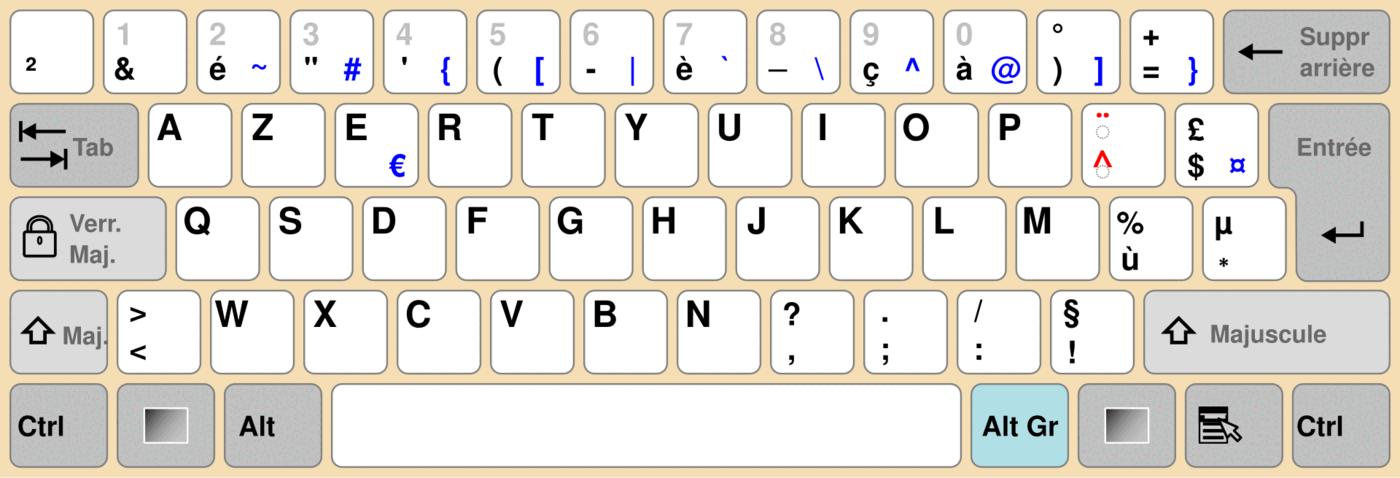

The consequence for a support group is immediate and mechanical. Instructions in a help thread are frequently keystrokes, and a keystroke recipe written on a QWERTY keyboard is simply wrong on an AZERTY one — wrong for shortcut combinations, wrong for anything requiring a digit, wrong for the character-by-character spelling of a path or a registry value. Nor is the layout a purely private matter: AFNOR, the French standards body, published an experimental standard in 1976 for a QWERTY layout adapted to French, NF XP E55-060, which did not displace AZERTY, and returned to the question in 2019, publishing a revised AZERTY alongside a version of the BÉPO layout as standard NF Z71-300 — a project begun in 2016 at the instance of the culture ministry, which is the department responsible for language affairs.
The words themselves, and the bodies that set them
French computing vocabulary is not simply French words for English things; a good deal of it was made deliberately, by named people, and some of it has been official since before most of this group's readers were born. The most famous case is the word for the machine itself. In 1955 IBM France wanted a French name for a new electronic data-processing machine, the IBM 650, and did not want a transliteration of computer. François Girard, who ran the company's advertising, consulted his former literature professor Jacques Perret, and Perret proposed a word close to ordonnateur, one who puts things in order, which also carried a sense drawn from ecclesiastical ordination; his actual suggestion was ordinatrice électronique, the feminine form being meant, he said, to keep the religious sense apart from the accounting one. IBM France took ordinateur, tried initially to protect it as a trademark, and within months gave up and let it into the public domain, by which time everyone was using it anyway.
The word for the discipline followed a parallel route: the German engineer Karl Steinbuch coined Informatik in 1957, and in March 1962 Philippe Dreyfus, formerly of Bull's national electronic computing centre, used informatique in France as the name of his company. The word for software was made to order. Logiciel was formed in 1969, from logique and matériel, by the Délégation à l'informatique charged with the Plan Calcul, and is attributed to Philippe Renard; the Académie française adopted it in 1972, and it was made official by a ministerial order published in the Journal officiel on 12 January 1974 and confirmed by a further order of 17 January 1982.
Those individual acts became a standing institution. The Commission générale de terminologie et de néologie was created by decree 96-602 of 3 July 1996, placed under the authority of the Prime Minister, and charged with approving new terms proposed by specialist expert groups, in liaison with the Académie française, and with publishing them; the Délégation générale à la langue française et aux langues de France coordinates the arrangement from within the Ministry of Culture. It was renamed the Commission d'enrichissement de la langue française by a decree of 25 March 2015. Approved terms are promulgated in the Journal officiel, and French public administrations are required to use them.
The example closest to this group's own medium is electronic mail. Courriel, a portmanteau of courrier and électronique, originated in Quebec and was adopted for official French usage on 20 June 2003, after which French administrations and public services were obliged to prefer it to any other term; the Ministry of Education passed the instruction on in a bulletin of 28 August 2003. The abbreviation mél., recommended in 1997 for prefixing an address on a letterhead or business card in the way tel. prefixes a telephone number, was confirmed at the same time with an explicit warning that it must never be used as a noun — a warning widely ignored. And the word for unsolicited mail, pourriel, was proposed in May 1997 by the Office québécois de la langue française, which is a separate body under separate authority: Quebec's language institutions and France's are not the same, and they do not always converge.
None of this obliged anyone posting to a newsgroup to say anything in particular. But it does explain why a French-language technical discussion has a settled register that an ad-hoc translation does not, and why the vocabulary that turns up in a French support thread — logiciel, ordinateur, courriel, pilote, matériel — is a public vocabulary with dates attached rather than a set of improvisations.
The law of 4 August 1994
Behind the vocabulary sits a statute, and it is more specific than its reputation suggests. The Toubon law — properly law 94-665 of 4 August 1994 relating to the usage of the French language — requires French in official government publications, in advertising, in workplaces, in commercial contracts, in state-funded schools, and in broadcast programming, with exceptions for musical works and original-version films. It does not reach private, non-commercial communication: it has nothing to say about what individuals write to one another, including on a newsgroup. Books, films and public speeches are outside it too.
The provision that bears on this page is the workplace one. Any document setting out obligations for an employee, or whose contents are necessary to the performance of their work, must be written in French. The consequence for software is direct and has been enforced: computer software developed outside France must have its user interface and its manuals translated into French to be used lawfully by companies in France. There is an exception in the text for documents originating abroad, and the appellate courts have read it narrowly. In 2006 the French subsidiary of the American company General Electric Medical Systems was fined 500,000 euros, with a further 20,000 euros per day, for supplying highly technical documents and software interfaces to its employees in English only, and the penalty was upheld on appeal. An earlier complaint, in the mid-1990s, was brought by two language-defence associations against the Metz campus of the Georgia Institute of Technology over an English-only website; it was dismissed on a technicality, and the school published a French version regardless.
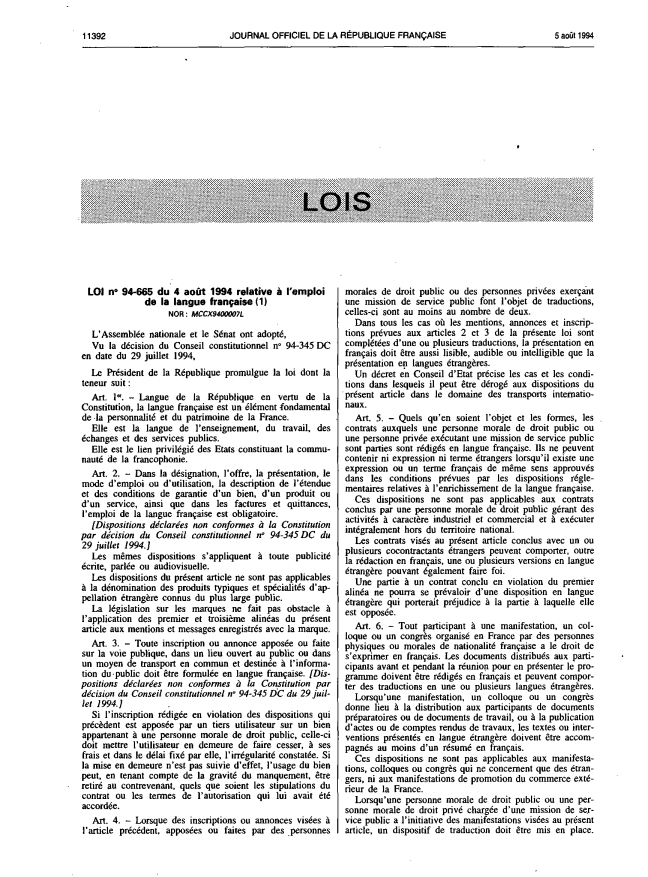

Put the Toubon law next to the localisation facts above and the picture completes itself. A French company running Windows XP was not choosing a French edition out of preference; French interfaces and French documentation were a condition of lawful use in the workplace, and the multilingual framework that might have allowed a single English installation to be switched was in any case sold only under volume agreement. French-language Windows was, for a large part of its user base, the only Windows there was — and French-language support for it was correspondingly not an optional extra but the ordinary case.
Where a French speaker actually went for help in 2002
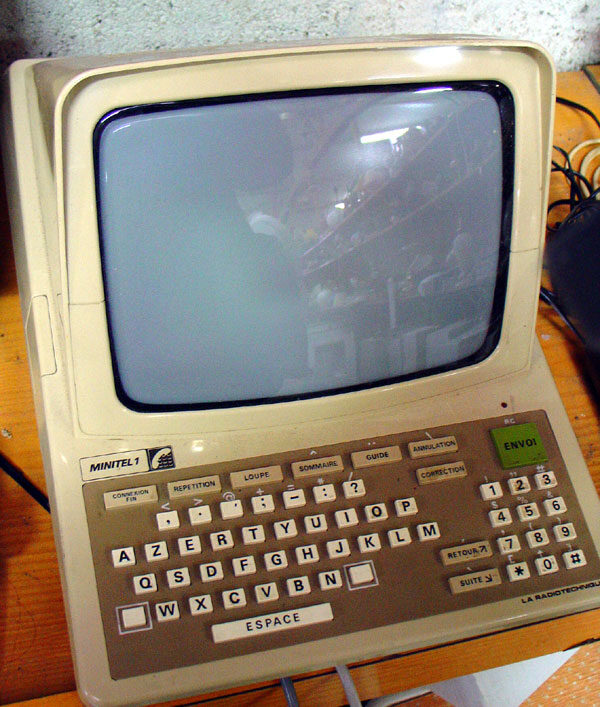
The independent newsgroups were one option among several, and it is worth laying out the whole field, because a directory that shows only the groups it happens to preserve will flatter them. France had also arrived at the public Internet from an unusual direction: Minitel, officially Télétel, the videotex service developed by the state-owned France Télécom and delivered over telephone lines, had been the world's first successful mass-market online service, and French households had a decade's habit of consulting a screen for services before the web existed. By 2002 the consumer Internet had largely taken over, and the ISP whose name appears in the headers of this group's creation message, Wanadoo, was France Télécom's own.

Microsoft ran French-language support groups of its own, and they were substantial. The master newsgroups list still carries 103 names under the microsoft.public.fr. prefix, among them six for Windows XP specifically — a general group plus separate rooms for connexion, debutants, installation, materiel and multimedia — with the beginners' group named as such in French. This directory preserves one member of that French branch, microsoft.public.fr.scripting.ie-oe-animation, and the French-language Microsoft groups as a family are that page's subject rather than this one's. How the microsoft.public.* hierarchy was constructed and governed, who answered in it, the Most Valuable Professional award and the hierarchy's retirement in 2010 are all set out on the microsoft.public.* page, and none of it is repeated here.
Within Usenet proper, the formal francophone option in 2002 was fr.comp.os.ms-windows.win95 or fr.comp.os.ms-windows.winnt, depending on how a reader classified their machine — an awkward choice for an operating system that had just merged the two lineages, and one of the reasons the taxonomy was eventually consolidated. There were also fr.comp.os.ms-windows.programmation and fr.comp.os.ms-windows.serveurs for the developer and server questions, and the wider fr.comp.* branch for everything adjacent. The general shape of the computing branch of Usenet, of which all of these are national reflections, is described on the comp.* page.
Then there were the vendor and manufacturer channels: telephone support attached to a pre-installed machine, the OEM's own helpline, the retailer, and Microsoft's own knowledge base. The distinctive thing the newsgroups offered against all of these was not expertise, which the vendors also had, but a searchable public record of other people's identical problem, written in the reader's own language, at no cost and with no queue. That is what a French-language Windows XP group was for, whichever hierarchy it sat in.
The security years
The reputation Windows XP carried for the rest of its life was made in eighteen months, between the beginning of 2003 and the middle of 2004, and the events are precisely dated. They are set down here as history; nothing in this section is advice.
SQL Slammer, in January 2003, did not attack Windows XP as such — it exploited Microsoft SQL Server — but it set the weather. It infected most of its roughly 75,000 victims within ten minutes, produced a denial of service on a large number of Internet hosts, crashed routers worldwide and measurably slowed general traffic. It demonstrated that a small worm exploiting a patched vulnerability could saturate the network faster than any human response.
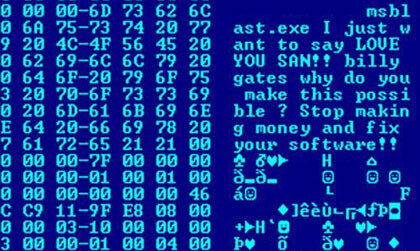
Blaster, also called Lovsan or MSBlast, arrived in August 2003 and did attack Windows XP and Windows 2000 directly. It exploited a buffer overflow in the DCOM remote procedure call service, discovered by the Polish research group Last Stage of Delirium, for which Microsoft had issued a patch a month earlier as MS03-026, catalogued as CVE-2003-0352. Because the flaw was in a network service, no attachment had to be opened and no user had to do anything: the worm spread by sending itself to random IP addresses. By 15 August the number of infected systems was reported at 423,000. The code carried two messages, one of them addressed to Microsoft's co-founder — billy gates why do you make this possible ? Stop making money and fix your software!! — and was programmed to launch a SYN flood against the Windows Update address, an attack that largely failed because the name it targeted was only a redirect. On 18 August a second worm, Welchia, appeared: it sought out and deleted Blaster and then attempted to download and install Microsoft's patch, which earned it the label of a helpful worm and, from Microsoft, the observation that it did not always succeed in applying the patch.

Mydoom followed on 26 January 2004 by a different route, spreading as electronic mail rather than through a network service, and became the fastest-spreading mail worm recorded — a record that still stands.
Sasser closed the sequence. It was released on 29 April 2004 and exploited a buffer overflow in the Local Security Authority Subsystem Service, documented by Microsoft as MS04-011 and catalogued as CVE-2003-0533; the patch had shipped earlier the same month. Like Blaster it needed no user action, scanning address ranges and connecting on TCP port 445, then pulling itself across from an FTP server running on the machine that had infected it. Its most familiar symptom was a side effect rather than a payload: crashing the LSASS process produced the system's own shutdown countdown, so that infected machines announced themselves by rebooting. Its author, an eighteen-year-old German student named Sven Jaschan, was arrested on 7 May 2004, German investigators having been assisted by information supplied in response to a Microsoft bounty of 250,000 US dollars; he was tried as a minor, because the worm had been written before his eighteenth birthday, and received a twenty-one-month suspended sentence on 8 July 2005.
Service Pack 2 was released on 25 August 2004, four months after Sasser, and its defaults are best read as answers to that eighteen months. The firewall on by default addressed exactly the class of attack Blaster and Sasser represented, in which an unsolicited connection to a listening service was sufficient. Data Execution Prevention with hardware backing addressed the buffer overflow both had used. Removing raw socket support was intended to limit what a compromised machine could be made to do to others. Disabling the Messenger service closed the pop-up advertising channel. The Security Center made the state of these things visible to the user, which had not previously been true of any of them. Whether the release was sufficient is not a question for this page; that it was a security release rather than a maintenance one is a matter of record.
The long tail
Windows XP outlived its own succession by an unusual margin, and the group named after it outlived the operating system in the sense that its name is still in the master newsgroups list. By the web-measurement estimates of Net Applications, XP remained the most widely used desktop operating system until August 2012, when Windows 7 passed it; StatCounter's figures place that crossover almost a year earlier, which is a useful reminder that all such numbers are samples of web traffic rather than counts of machines.
The figures around the end of support should be quoted with their sources attached, and here they are. In January 2014, three months before extended support ended, Net Applications reported Windows XP at 29.23 per cent of desktop operating systems; W3Schools, measuring a very different population, reported 11.0 per cent. It was estimated in the same month that more than 95 per cent of the world's three million automated teller machines still ran Windows XP, machines whose service lives run from seven to ten years and occasionally to fifteen. At least 49 per cent of all computers in China were reported still running it at the beginning of 2014. The reasons given for the holdouts were mundane rather than sentimental: the poor reception of Windows Vista, a recession that suppressed new machine sales, and the planning and application-compatibility testing that a corporate migration requires — not least for software tied to Internet Explorer 6.
Where migration was impossible, governments bought time. The Netherlands and the United Kingdom negotiated Custom Support agreements with Microsoft for continued internal use; the British deal ran for a year, covered Office 2003 as well — which reached end of life on the same day — and cost 5.5 million pounds. The United States Computer Emergency Readiness Team issued an alert in March 2014 warning that continued use after 8 April might prevent an organisation from meeting federal information security requirements. Microsoft deployed an update that put a reminder on the screen on the eighth of each month, which users could switch off.
The tail is still measurable. By September 2022, StatCounter's figures put Windows XP below one per cent of the Windows share in most regions, and as low as 0.5 per cent in Africa; a handful of countries were still reported in double figures, with Armenia at 72 per cent of Windows PCs as of July 2025 according to the same source. Those last figures should be treated with the caution that any single web-measurement series in a small market deserves. The general point stands without them: an operating system released in 2001 was supported until 2014, patched in its embedded form until 2019, and is not entirely gone.
Scope and limits
This page is a directory entry, and the honest statement of what it rests on is short. The group's own traffic has not been examined for it. No archive of alt.fr.comp.os.ms-windows.xp has been read, no thread is described, no participant is named, no volume is estimated. Everything asserted about the group itself comes from nine archived control messages and from the two catalogue files the Internet Systems Consortium distributes to news administrators, and those sources are exhausted in the first section above.
Several things follow that a reader should not infer. The group's creation date, 7 December 2002, is the date of its first archived newgroup message and not necessarily the date anyone first posted. Its presence in the master newsgroups list means that news administrators were offered the name, not that servers carried it or that readers subscribed. The two-word description windows xp was written by the person sending the control message and was never ratified by anybody: the rmgroup that answered it was correct that the group had no charter, and it never acquired one. Whether the group was busy, quiet or empty is not established here.
Nor does this page claim to have settled the history of the alt.fr.* branch. The earliest control message it found for any alt.fr.comp.* name is dated 1 August 2001, and the branch may well be older than that in ways the control archive does not record. The relationship between fr.* and the separate france.* hierarchy is noted above and left unresolved. Who created the December 2002 batch, and why, is not addressed: the messages give an address and a posting host, and this directory does not identify private individuals from routing headers.
What can be said with confidence is the frame the group sat in, and that frame is well documented: a formal French hierarchy with charters, votes and a signed control key, which never made a Windows XP group and consolidated its Windows groups in 2005; an informal branch in which a name cost one article and lasted as long as administrators tolerated it; an operating system with a precise release chronology, three service packs of which the second was a security release, and an activation system that drew named criticism from the trade press on the day it shipped; and a language with an official technical vocabulary, a statutory place in the workplace, a keyboard of its own and a decade-long argument about whether its accents would survive a Usenet hop. Those are the things this group existed among. The full catalogue of what this gateway carried is on the all-groups list.
Reading alt.fr.comp.os.ms-windows.xp today
- Historical archive: Google Groups — alt.fr.comp.os.ms-windows.xp (coverage varies by group and era).
- Open in a newsreader:
news:alt.fr.comp.os.ms-windows.xp— the original site offered exactly this link, and it still works if your system has a newsreader registered for thenews:scheme. - Live access: point an NNTP newsreader at a modern server — see accessing Usenet today.
- The original news2mail e-mail subscription service ended in the mid-2000s and no longer operates.